Customer Success
Articles on customer success.
A banking customer journey map is a visual model of every stage a customer goes through with a bank or credit union, from the first need through account opening, onboarding, everyday banking, problems, borrowing, and the decision to stay or leave, with the customer's goal, touchpoints, and emotions recorded at each stage.
Ecommerce customer feedback is what online shoppers tell a store about why they bought, hesitated, abandoned a cart, returned an item or never ordered again. Unlike ecommerce analytics, which records what shoppers did, it explains why they did it.
Hotel guest loyalty is a guest's tendency to choose the same hotel or brand again when a real alternative exists, combining repeat stays with a preference strong enough to survive a better rate elsewhere.
The Marriott customer experience strategy is the system Marriott International uses to measure and act on guest feedback: a short post-stay guestVoice survey scored on Intent to Recommend (ITRec), manager follow-up with guests who score below 9, and Marriott Bonvoy, a loyalty program of 309 million members.
Retail personalization is the practice of tailoring products, offers, content, and service to an individual shopper based on what a retailer knows about that person, across store, site, app, email, and loyalty channels.
The Sephora customer experience is how the prestige beauty retailer serves shoppers across its stores, app and sephora.com, anchored by Beauty Insider, a free three-tier loyalty program with more than 46 million members. Sephora uses that program both to reward purchases and to listen to what members say.
Small business banking customer experience is how business owners judge every interaction with their bank or credit union, from onboarding and lending to service, digital tools and relationship managers. The industry's most cited benchmark is J.D. Power's annual U.S. Small Business Banking Satisfaction Study.
The Starbucks customer experience strategy is Back to Starbucks, CEO Brian Niccol's plan to restore the coffeehouse experience through Green Apron Service staffing, a four-minute service-time target, and a tracked customer connection score.
The main reasons why customers switch banks are value and trust: fees, deposit and loan rates, and sign-up bonuses pull them toward a competitor, while service failures, fraud handling and surprise charges push them out.
Voice of customer analytics is the practice of using text, speech and statistical analysis to find patterns in what customers say across surveys, support tickets, calls, chats, reviews and social posts, then measuring how often each theme appears and how it relates to outcomes like satisfaction, spend and churn.
A bank loyalty program rewards customers for keeping balances, transactions, or products with one institution, through tiered relationship pricing, card rewards, rate bumps, fee waivers, or, at credit unions, bonus dividends. Rewards rarely create banking loyalty on their own: in J.D.
Hospitality customer experience in 2027 will be won by the hotels and restaurants that know why guests don't come back, and they will learn it by asking in conversation (text or voice, in the guest's own language) instead of with a form. Going into 2027, hotel satisfaction is rising: the J.D.
Hotel KPIs for 2027 fall into two groups: revenue and operational KPIs that report what already happened (occupancy, ADR, RevPAR, TRevPAR, GOPPAR, CPOR, ALOS, booking pace, direct booking share, and cost of acquisition), and guest experience KPIs that predict what happens next (guest satisfaction score, hotel NPS…
Insurance customer experience in 2027 will be decided at four moments: the quote, the first bill, the claim, and the renewal that carries a rate increase. U.S. auto insurance prices rose about 56% between January 2022 and early 2026 in the Bureau of Labor Statistics consumer price index, peaking at a 22.6% annual increase in April 2024, and policyholders responded by shopping.
The insurance customer journey in 2027 runs through seven stages (need trigger, shopping and quote, application and underwriting, onboarding and first bill, policy life, claim, and renewal), but policyholders decide whether to stay or shop at three of them: the quote, the claim, and the renewal price.
Restaurant loyalty programs reward repeat guests with points, visit credits, tier status, paid perks, or stored-value bonuses, and in 2027 the strongest ones will be judged on whether they change visit frequency, not on how many people enroll.
In 2027, retail loyalty programs will be judged less on how many members they sign up and more on whether the retailer knows why members spend less or leave. There are six main types: points, tiered, paid membership, cashback, coalition, and value-based or community programs. The biggest examples are enormous.
The best exit intent survey tools for ecommerce in 2026 start with Perspective AI, which runs a short AI-led exit interview that asks why a shopper is leaving and follows up on the answer, followed by Hotjar and Survicate for fixed popover surveys.
Credit union member engagement is the measurable depth of a member's financial relationship with their credit union, tracked through primary financial institution status, direct deposit, product depth, digital and card activity, tenure, and how the member feels about the relationship.
Hotel guest communication is every message a hotel and its guest exchange across the stay, from the booking confirmation and pre-arrival email through check-in, mid-stay check-ins, checkout, the post-stay email and later win-back offers.
Restaurant customer experience is the sum of every interaction a guest has with a restaurant brand, from finding it and placing an order through the meal, the takeout bag or delivery handoff, and the later decision about whether to come back.
Banking customer experience trends in 2026 are the shifts in how retail customers choose, use, and judge their banks: AI assistants handling everyday servicing, personalization built on account data, smaller and more advisory branches, a reset on fees, fraud response as a loyalty driver, fierce competition for primary…
Improving customer experience in banking is the practice of finding and fixing the specific moments, such as account opening, fee changes, fraud claims and branch closures, where customers decide whether a bank deserves to be their primary financial institution.
Customer experience in a retail store is the sum of every physical and human moment a shopper has inside a store: finding the product, getting help, waiting, paying, returning and picking up. It is judged mostly on whether the shopper left with what they came for, and on how much effort that took.
A credit union member experience score is a recurring metric, usually member Net Promoter Score (NPS), member satisfaction (CSAT), member effort (CES), or an external index such as the ACSI or J.D.
Retail customer experience trends in 2026 are the eight shifts changing how shoppers find, buy, return, and stay loyal to retailers: AI shopping assistants, agentic commerce, collapsing feedback response, returns economics, the store as a fulfillment hub, loyalty fatigue, associate experience, and a continuing slide in measured CX quality.
The best client satisfaction survey software for agencies and professional services firms in 2026 is Perspective AI, an AI interviewer that runs asynchronous client debriefs, QBR check-ins, and post-project reviews and asks follow-up questions until it understands why a client scored you a 7.
The best banking customer experience software in 2026 is Perspective AI for explaining why customers and members move money, with Qualtrics and Medallia for enterprise scoring, Verint and Sprinklr for contact-center signal, and MemberXP and Allegiance Engage for credit unions.
The best insurance customer feedback software in 2026 is Perspective AI for explaining why policyholders feel the way they do after a claim or a renewal, followed by Medallia and Qualtrics for enterprise-wide experience management.
The best resident survey software in 2026 is the tool that tells you why a resident is leaving before the notice to vacate lands, and on that test Perspective AI ranks #1 as an AI interviewer that runs conversational renewal and move-out interviews over an SMS or email link in 57 languages.
The best survey software for nonprofits in 2026 is Perspective AI for organizations that need to learn why donors lapse and what beneficiaries actually need, followed by QuestionPro, SurveyMonkey, and Alchemer for traditional structured surveys.
Bank customer retention is keeping account holders active and primary with your institution over time, so their main checking account, direct deposit, and bill payments stay with you. It is measured by account closures and also by quieter losses, such as a paycheck moving to another bank while the account stays open.
Customer onboarding in banking is the set of steps a bank or credit union takes from account opening through roughly the first 90 days to verify a new customer, get the account funded and used, and turn it into the customer's primary financial relationship.
Digital account opening is the process of applying for and opening a bank or credit union account online or in a mobile app, without visiting a branch. It covers the application form, identity verification, required disclosures, and funding the new account, and abandonment is the share of applicants who start the…
A dormant account is a bank account with no customer-initiated activity, such as a deposit, withdrawal, or login, for a period set by the bank and by state law. Each bank sets its own rule for flagging an account as inactive, and if the owner still cannot be reached after three to five years, state unclaimed property…
Retail employee engagement is how committed and involved store associates are in their work and their store. Engaged associates help shoppers find what they need, flag problems to managers, and stay longer, and retailers measure it with employee surveys tied to store results like sales, shopper satisfaction, and…
Chewy is the clearest public example of ecommerce customer experience working as a growth engine rather than a cost center. In fiscal 2025, Chewy reported $12.60 billion in net sales, 21.3 million active customers, and $591 in net sales per active customer, according to its fiscal 2025 annual report.
Digital banking customer experience is the sum of every interaction a customer has with their bank through the mobile banking app, online banking, digital onboarding, and the contact center that backs them up, and how those interactions shape whether the customer trusts, uses, and stays with the bank.
Financial services customer experience is the total of every interaction a customer has with a bank, credit union, lender, or wealth firm, from account opening and everyday transactions to loan decisions, problem resolution, and advice, and how those interactions shape trust, primacy, and the decision to stay.
Hilton's hotel guest experience strategy rests on three systems: a loyalty program with 243 million Hilton Honors members, an app-first stay with Hilton Digital Key, and a guest-satisfaction program that routes every unhappy response to a property with a 24-hour deadline.
Huntington National Bank built one of the clearest banking customer experience brands in the US by turning its fee policy into a promise, starting with 24-Hour Grace in 2010.
Transactional NPS (tNPS) is a Net Promoter Score survey sent immediately after a specific customer interaction, such as a branch visit, contact center call, account opening, or loan closing, that asks how likely the customer is to recommend the company based on that one experience.
"Customer retention software" is not one category — it is five different product types competing for the same search term, and picking the wrong lane is the most common way retention budgets get wasted.
The best restaurant feedback software in 2026, ranked by whether it can explain a guest's decision rather than just record their rating, is Perspective AI (#1), Tattle, Birdeye, Podium, ReviewTrackers, Ovation, and Medallia.
Retail has the richest behavioural data of any industry and the thinnest explanation of it. Foot traffic counters, point-of-sale systems, loyalty programs, location analytics and ecommerce clickstream together produce an extraordinarily detailed record of what shoppers did — which stores they entered, what they…
Customer experience management in banking is organised by channel while customers experience journeys that cross them, and that mismatch is where most banking CX failure now concentrates.
Guest experience management in 2026 runs on a six-layer stack, and hotels have workable tooling for the five operational layers while the sixth — the understanding layer, which establishes why guests chose, returned or left — is missing from most stacks entirely.
Every checkout abandonment tool on the market is a recovery tool, and Perspective AI is the only one on this list that answers the question recovery can't: why the shopper left.
Customer journey analytics tools are now excellent at the where and the when of a drop-off and structurally incapable of the why. Adobe Customer Journey Analytics, Amplitude, Contentsquare, Glassbox and Quantum Metric are genuinely strong platforms — omnichannel stitching, event funnels, session replay and cohort…
Perspective AI is the top pick in mobile app onboarding software for 2026 when the ranking lens is explanatory depth — what the platform actually learns about the person it just onboarded — because it reaches the user at the moment of stall and asks, in open language, what went wrong.
Best Subscription Cancellation Flow Software in 2026: 8 Tools Ranked by Save Rate and Reason Capture
Cancellation flow software intercepts the cancel click, asks the subscriber to pick a reason from a list, then serves a save offer matched to that reason — a discount, a pause, a plan swap, a shipment skip.
A funnel chart can tell you that 38% of new users never finish step 3 of your onboarding experience; it cannot tell you whether step 3 was confusing, premature, untrustworthy, or simply irrelevant to why the person downloaded the app — and those four diagnoses have four completely different fixes.
A subscription pause request is a customer telling you the value is real but the timing, cadence, or price is wrong — which is different information from a cancel, and far more actionable.
Qualtrics renewal negotiation is the 90-to-180-day window before your contract's renewal date when a buyer still holds credible leverage over price, response volume, module bundling, uplift caps, and exit terms — leverage that largely evaporates once the non-renewal notice deadline passes.
Customer feedback data privacy is decided less by what the law says than by what your CX team does on autopilot — retention windows nobody set, verbatims nobody scanned, and AI processing nobody disclosed.
The best Qualtrics alternatives for B2B SaaS in 2026 are led by Perspective AI, a conversational research platform that interviews named accounts at interview depth instead of sampling them at consumer volume.
Journey orchestration is the practice of deciding and delivering the next best action for an individual customer in real time, using live behavioral signals, business rules, and predictive models to coordinate messages and interventions across every channel at once.
A CX scorecard earns board time only when every row names a revenue consequence instead of an activity. Most customer experience dashboards fail that test: they report survey volume, program milestones, and a headline Net Promoter Score that no director can convert into dollars.
Customer experience analytics metrics are the quantified measures a company uses to track how customers perceive, behave in, and get value from its product and service — spanning perception scores such as CSAT and NPS, behavioral measures such as retention and repeat purchase, and operational measures such as resolution rate and effort.
Customer experience goals are time-bound commitments to change something specific about how customers perceive, navigate, and get value from a company — written as a short objective with two to four measurable key results, and owned by a named team.
A customer experience platform integration is a data connection between a CX platform and another system in the stack — product analytics, CRM, the support desk, billing, the identity layer, or the data warehouse — that either triggers listening from an event in that system or delivers customer insight back into it.
Customer lifecycle marketing is the practice of changing what you say to a customer based on the phase of the relationship they are actually in — pre-purchase, onboarding, mid-life, renewal, or lapsed — rather than sending everyone the same message on the same calendar.
The customer lifecycle stages are the six sequential phases a customer moves through with a company — awareness, acquisition, onboarding, adoption, retention, and advocacy — each with its own objective, its own dominant failure mode, and its own signal that things are going well.
A customer lifecycle touchpoint is a single, bounded moment of contact between a customer and your company — a signup, an onboarding session, a first support ticket, a feature they finally turn on, a renewal notice, a cancellation — that both reveals something about the state of the relationship and creates an opening to ask about it.
Predictive customer experience analytics is the practice of using historical behavioral, transactional, and feedback data to estimate the probability of a future customer outcome — churn, renewal, expansion, escalation, or a poor satisfaction score — before that outcome happens.
Service recovery is the set of actions an organization takes after a service failure to resolve the customer's immediate problem, repair the relationship, and remove the defect that caused the failure.
Qualtrics and Medallia NPS Alternatives in 2026: When You're Paying Enterprise Prices for One Metric
The right Qualtrics NPS alternative for a team that licensed an entire experience-management platform and now uses it to run one score is almost never another NPS tool — it is a conversational research layer that produces the reasons the score was supposed to point at.
On 18 May 2026, Qualtrics closed its $6.75 billion acquisition of Press Ganey Forsta — and most of the "best Qualtrics VoC alternative" listicles ranking on this search result page today were written before that happened.
Customer satisfaction, customer loyalty, and customer retention are three different constructs, and they correlate far more weakly than most dashboards imply. A finding widely cited in loyalty research — associated with Fred Reichheld's work and the Harvard Business Review loyalty literature of the 1990s — holds that…
Reported lifetime value benchmarks for 2026 cluster like this: ecommerce averages about $168 per customer in year one and $480 cumulative over three years; mid-market SaaS medians land near $43,200 against an SMB median near $9,850.
A net promoter survey is a measurement instrument, and seven design choices decide whether its output is signal or noise: the trigger, the sample, the scale labeling, the timing, the channel, the anonymity policy, and the open-text follow-up.
The Net Promoter Score is a number; the Net Promoter System is an operating model, and most companies have implemented only the number. Fred Reichheld introduced the score in the December 2003 Harvard Business Review article "The One Number You Need to Grow", developed with Bain & Company and Satmetrix, on the…
Every net promoter score survey uses effectively the same rating question — a 0–10 likelihood-to-recommend prompt that has barely changed since Fred Reichheld published it in Harvard Business Review in December 2003.
Perspective AI is the strongest Culture Amp alternative in 2026 for teams that need to know why engagement moved, not just that it moved — it replaces the annual survey with an AI-led interview that asks the follow-up a Likert scale cannot.
QBR software in 2026 does two different jobs, and most buyers only shop for one of them. Perspective AI is the top pick for the job that decides renewals — AI-led pre-QBR interviews with an account's real stakeholders, so the meeting opens with the customer's own account of value — while Gainsight CS, Matik, Topo.io…
B2B customer experience (B2B CX) is the sum of every interaction a business customer's buying group, day-to-day users, and executive sponsors have with a vendor across a long, multi-stakeholder relationship — from first evaluation through onboarding, adoption, renewal, and expansion.
Customer engagement metrics are the quantitative signals that measure how often, how deeply, and how meaningfully customers interact with your product or service over time.
Customer experience for startups is the deliberate practice of learning how customers feel about your product and acting on it — run by founders and early employees, before there is a dedicated CX team, budget line, or research function to own it.
Most customer experience mistakes are not dramatic failures — they are quiet habits that let a program run for years while slowly losing the customers it was built to keep. The nine mistakes below share one root cause: teams optimize the measurement of experience instead of the experience itself.
Driver analysis is a statistical method that identifies which underlying factors — support responsiveness, onboarding, product reliability, pricing — correlate most strongly with a customer experience outcome metric such as Net Promoter Score, CSAT, or renewal likelihood.
A Qualtrics implementation is a professional-services engagement — not a self-serve signup — in which the platform is configured, integrated with your systems, provisioned to named users, and rolled out across the organization, then billed separately from the software license itself.
SaaS customer experience is the sum of every interaction a customer has with a software product and the company behind it across the entire subscription lifecycle — from first sign-up and activation through daily use, expansion, and renewal.
Voice of customer examples are concrete illustrations of how real teams collect, structure, and act on customer feedback — the specific program shapes, questions, and closed-loop workflows that turn raw opinion into a decision.
Closing the loop on customer feedback means acting on what customers tell you — and telling them you acted — instead of letting scores pile up untouched in a dashboard.
Customer lifetime value cohort analysis groups customers by the month they signed up and tracks the cumulative revenue each group generates over time, so you can see whether newer customers are worth more or less than older ones.
SaaS customer lifetime value (CLV or LTV) is the total gross profit a subscription business expects from an account across its entire relationship — and the generic ecommerce formula (average order value × purchase frequency) breaks for it because subscriptions renew, expand, and contract instead of transacting in discrete orders.
The best customer lifetime value software isn't a single product — it's a four-layer stack, and the layer most teams skip is the one that explains why LTV moves. Perspective AI leads that strategic layer: it runs AI-moderated customer interviews at scale to surface the reasons behind expansion, contraction, and churn that no dashboard can show.
A good customer retention rate is generally 85% or higher per year, but it depends on your industry, business model, and whether you measure logo or revenue retention.
Customer retention metrics are the quantitative measures that track how many customers, and how much of their revenue, a business keeps over a defined period. The eight that actually predict renewals are: customer retention rate, churn rate, net revenue retention (NRR), gross revenue retention (GRR), repeat purchase…
A good customer satisfaction score is generally 75–85% CSAT — the share of customers who pick the top one or two boxes on a satisfaction question — or roughly 76–78 on the 100-point ACSI scale, which tracks near the U.S. national average.
A customer satisfaction survey is a structured request for feedback that scores how happy customers are with a product, interaction, or relationship — and the biggest lever isn't the wording of the questions, it's which type you run and when you trigger it.
Ecommerce customer lifetime value (CLV) is the total gross profit a store earns from a single customer across every order they place, modeled as average order value × purchase frequency × customer lifespan, then adjusted for gross margin.
Ecommerce customer retention is the discipline of turning one-time buyers into repeat customers, and it is where most direct-to-consumer (DTC) brands leave money on the table.
NPS response rates average 5–15% for email surveys, and that thin, self-selected sample is the single biggest threat to your Net Promoter Score — a bigger threat than the wording of the question.
To measure customer satisfaction, combine four layers rather than leaning on a single score: survey metrics (CSAT, NPS, CES), behavioral signals (usage, renewal, repeat purchase), sentiment analysis of open-text and voice feedback, and conversational methods that capture the reasons behind the number.
Net revenue retention (NRR) — also called net dollar retention (NDR) — measures the percentage of recurring revenue a company keeps from its existing customers over a period, counting expansion (upsells, cross-sells, price increases) and subtracting contraction and churn, while excluding revenue from newly acquired customers.
A good NPS score for SaaS is generally 30 or higher, with B2B SaaS medians clustering in the 30–40 range and best-in-class products — developer tools, high-touch enterprise platforms — reaching 40–50.
Predictive customer lifetime value (predictive CLV) forecasts how much a customer will be worth over their remaining relationship, rather than summing what they have spent so far.
Retention rate is the percentage of customers (or revenue) you keep over a period; churn rate is the percentage you lose over that same period. They describe the same event — a customer staying or leaving — from opposite directions, and they only add up to exactly 100% in the simplest case: counting logos, over one…
A client experience strategy is the deliberate plan a B2B or professional-services firm uses to win, deepen, and retain a small number of high-value accounts — where relationships, not survey volume, drive revenue.
Customer success vs. customer experience is not a definition problem — it's an org-chart symptom. Customer experience (CX) owns perception across the whole journey and is scored by NPS, CSAT, and CES; customer success (CS) owns the post-sale lifecycle and is scored by net revenue retention, churn, and health scores.
A CX team is the group accountable for the end-to-end customer experience — but most are built as an org chart around dashboards and journey maps, not around the one job that matters: knowing why customers act the way they do.
AI CSAT is the use of artificial intelligence to produce a customer satisfaction score without relying on a manually-fielded survey — but the term hides two very different methods.
The CLV:CAC ratio compares how much a customer is worth over their lifetime (customer lifetime value, or CLV) against how much you spent to acquire them (customer acquisition cost, or CAC).
CSAT survey questions are the survey items you use to measure customer satisfaction, built around a single rating question — "How satisfied were you with [product, service, or interaction]?" — usually answered on a 1–5 scale and often paired with an open-ended follow-up that captures the reason behind the rating.
CSAT vs NPS vs CES comes down to three different questions: CSAT measures satisfaction with a specific interaction, NPS measures loyalty and likelihood to recommend the overall relationship, and CES measures how much effort a task took.
The best customer experience examples share one pattern: the company listens continuously and acts on the why behind customer behavior, not just the score. Chewy mails handwritten cards and sends surprise flowers when a customer's pet dies; Amazon stripped friction out of buying with one-click ordering and…
Customer experience KPIs are the quantified measures teams use to track how customers perceive and value their interactions with a company across the entire relationship — from first touch to renewal.
Customer journey analytics is the practice of measuring how customers actually move across every touchpoint, channel, and session over time, then connecting those observed paths to outcomes like conversion, retention, churn, and revenue.
Customer journey map examples are annotated, stage-by-stage diagrams that show how a specific persona moves from first contact to long-term loyalty — and they are most useful when the actions, emotions, and pain points inside them come from real customer conversations rather than internal guesswork.
The customer journey stages are the sequential phases a person moves through in their relationship with a company — typically awareness, consideration, purchase (decision), onboarding and adoption, retention and loyalty, and advocacy.
Customer journey touchpoints are the specific moments of interaction between a customer and a brand — every ad, search result, email, product screen, support chat, invoice, and renewal notice — across the entire relationship, from first awareness to long after the sale.
The best employee experience examples all share one transferable pattern: the organization listens to employees in their own words and visibly acts on what it hears.
eNPS (Employee Net Promoter Score) is a single-question metric that measures how likely employees are to recommend their organization as a place to work, scored on a scale from -100 to +100.
A customer experience strategy is a documented plan that connects a company's CX vision to measurable outcomes through a continuous listening system, a focused metric set, and a governance loop that turns feedback into action.
An employee experience strategy is a documented plan for how an organization intentionally shapes every interaction an employee has with the company — from recruitment and onboarding through daily work, growth, and exit — and how it listens to, measures, and acts on those interactions to improve them over time.
Customer retention rate is the percentage of existing customers a business keeps over a defined period, excluding any new customers won during that window. The customer retention rate formula is ((customers at end − new customers acquired) ÷ customers at start) × 100, and it answers one question: of the customers you…
Knowing how to improve customer satisfaction starts with separating the metric from the outcome: the score is a symptom, and the experience is the cause. Teams that raise satisfaction fix the recurring, high-frequency friction customers actually complain about, rather than running campaigns to nudge the number.
Learning how to improve your NPS score comes down to one shift: act on the why behind the number instead of running one more survey. Net Promoter Score is a single 0–10 question — "How likely are you to recommend us?" — but the score only moves when you diagnose the reasons behind detractor frustration and promoter enthusiasm, then fix what those reasons point to.
To increase customer lifetime value you pull three levers — retention, expansion, and margin — and the biggest returns come from compounding all three rather than optimizing one. Retention is the highest-leverage starting point: Bain & Company found that a 5% increase in retention can raise profits by 25% to 95%.
SaaS customer retention is the discipline of keeping paying subscribers active, engaged, and renewing over time — measured as the percentage of customers (or recurring revenue) a software company holds onto across a defined period rather than losing to churn.
The ROI of customer experience is the measurable financial return a company earns from improving how customers perceive and interact with it, calculated as the net revenue gains plus cost savings from experience improvements, divided by the cost of those improvements.
Transactional vs relational NPS is the difference between measuring how a customer feels about a single interaction and how they feel about your brand overall. Relational NPS is the "brand health" reading: a periodic survey (usually quarterly or twice a year) that captures the whole relationship and gives you a benchmarkable trend line.
Client retention is the practice of keeping the accounts a professional-services firm already serves — agencies, consultancies, law and accounting firms, and other B2B service providers — engaged, renewing, and expanding over multiple contract cycles.
Customer experience metrics are the standardized measurements teams use to quantify how customers perceive, feel about, and behave toward a company across its products, service, and touchpoints.
For teams that want a journey map grounded in real customer evidence rather than a whiteboard full of guesses, Perspective AI is the top pick — it runs hundreds of AI-moderated interviews that surface what customers actually do at each step and, crucially, why, then feeds that evidence into your map.
Customer lifecycle management is the practice of tracking and shaping a customer's relationship with a company across every stage — from first awareness through onboarding, adoption, renewal, expansion, and advocacy — using a defined metric and a deliberate touchpoint at each step.
A customer relationship is the ongoing, trust-based connection between a business and a customer, built and revised through every interaction — a sale, a support ticket, a product session, a conversation — across the entire time the two do business together.
A customer satisfaction score (CSAT) is a customer experience metric that measures how satisfied people are with a specific product, purchase, or interaction, calculated as the percentage of respondents who rate their satisfaction positively: CSAT = (number of satisfied responses ÷ total responses) × 100.
To calculate your NPS score, subtract the percentage of respondents who are detractors (people who answered 0–6 on the "how likely are you to recommend us" question) from the percentage who are promoters (people who answered 9 or 10); the result is a single number between −100 and +100.
The NPS scale is the 0-to-10 rating scale a customer uses to answer the single Net Promoter Score question — "How likely are you to recommend us to a friend or colleague?" — where 0 means "not at all likely" and 10 means "extremely likely." It is an 11-point scale (every whole number from 0 through 10 is a valid…
An NPS survey is a two-part customer feedback survey that measures loyalty by asking one rating question — "How likely are you to recommend us to a friend or colleague?" on a 0–10 scale — followed by one open-ended question asking why.
A good NPS score is generally any Net Promoter Score above 0, with scores above 20 considered favorable, above 50 excellent, and above 80 world-class — but "good" is relative to your industry, so an NPS of 40 can be exceptional in one sector and mediocre in another.
An employee experience (EX) platform is software that measures, analyzes, and helps improve how employees experience their work — across onboarding, everyday engagement, and exit — by collecting employee feedback, tracking metrics like engagement and eNPS, and giving people teams the analytics and workflows to act on what they find.
Customer feedback is the information customers share about their experience with a product, service, or brand — what worked, what frustrated them, and what they wish were different.
Customer lifetime value (CLV, sometimes written LTV) is the total gross profit a business expects to earn from a single customer across the entire relationship, most simply calculated as average purchase value × purchase frequency × customer lifespan, then multiplied by gross margin.
Customer retention is a company's ability to keep its existing customers paying, active, and loyal over a defined period, and it is measured by the customer retention rate — the percentage of customers a business holds onto across that window, calculated as ((customers at the end − new customers acquired) ÷ customers at the start) × 100.
Net Promoter Score (NPS) is a customer loyalty metric that measures how likely customers are to recommend a company, product, or service to a friend or colleague, calculated as the percentage of promoters minus the percentage of detractors on a single 0–10 survey question.
Airline customer experience is the sum of every interaction a passenger has with a carrier across the full journey — booking, check-in, the airport and gate, the flight, baggage claim, and the irregular operations (delays, cancellations, rebookings) in between.
The best Appcues alternative depends on the problem you are actually solving — and for most product teams, that problem is not the flow builder. Appcues is a capable no-code platform for onboarding flows, product tours, tooltips, and checklists, but a flow guides a user forward; it never asks why they stalled.
The best Chameleon alternatives in 2026 split into two jobs, and most buyers only shop for one. Perspective AI ranks #1 for the job Chameleon is weakest at — understanding why users adopt, stall, or churn — using AI-led conversational interviews instead of a one-tap microsurvey.
The best ChurnZero alternatives in 2026 fall into two camps: customer success operations platforms that automate playbooks and health scores, and conversational research platforms that surface why customers actually leave.
The best Gainsight alternatives in 2026, ranked by how well each explains the reasoning behind a health score rather than merely automating the workflow around it, are Perspective AI (#1 for conversational voice-of-customer that captures why accounts churn or expand), Vitally, ChurnZero, Planhat, Totango, Catalyst.
The best Planhat alternatives in 2026 split into two camps: full customer success platforms that replace Planhat's data model and workflow engine — Gainsight, Totango, Vitally, ChurnZero, Custify — and the conversational voice-of-customer layer that closes the insight gap every one of them shares.
The best Totango alternatives in 2026, ranked by how well each captures the voice of the customer behind the health metrics rather than just automating the workflow around them, are Perspective AI (#1 for conversational insight into why accounts renew, churn, or expand), Gainsight, Vitally, ChurnZero, Planhat.
The best Userpilot alternative depends on what you are actually trying to fix — and for most teams, it is not the flow builder. Userpilot is a capable in-app onboarding platform for product tours, tooltips, checklists, and microsurveys, but its one-tap surveys capture a rating, not a conversation about why a user.
The best Vitally alternatives in 2026, ranked by how well each explains the reasoning behind a product-led churn or expansion signal rather than merely charting it, are Perspective AI (#1 for the conversational insight layer that captures why PLG accounts churn or expand), Gainsight, ChurnZero, Planhat, Totango.
Credit union member experience is the sum of every interaction a member has with their credit union — from joining and onboarding through daily digital banking, life events, and support — measured by how well those moments earn trust, deepen the relationship, and keep the member from moving their primary account.
Delta Air Lines built one of the strongest customer experience moats in aviation by competing on operational reliability, SkyMiles loyalty, the Fly Delta app, and premium cabin segmentation rather than on price.
Grocery customer experience is the sum of every interaction a shopper has with a grocery brand across store, app, delivery, and loyalty program — from finding a parking spot and scanning the produce for freshness to receiving a substituted item in a delivery order and deciding whether the points were worth the trip.
Instacart's customer experience is the end-to-end journey a grocery-delivery customer moves through on the Instacart marketplace — browsing a retailer's catalog, placing an order, watching a gig shopper pick and substitute items in real time, and rating the delivery afterward on a 1-to-5-star scale.
Navy Federal Credit Union is the world's largest credit union, serving more than 15 million members and holding over $200 billion in assets as of the first quarter of 2026, according to National Credit Union Administration call-report data.
Spotify customer retention is the combination of algorithmic personalization, habit-forming rituals like Spotify Wrapped, and multi-user pricing tiers that Spotify uses to keep listeners subscribed month after month.
Streaming customer experience in 2026 is defined by one brutal metric: subscriber churn. Premium SVOD services lose roughly 4.6% of subscribers every month, and about 41% of US consumers cancel at least one streaming service in any six-month window.
Wealth management customer experience spans every interaction a client has with their advisory firm — onboarding, portfolio reviews, and the unscripted moments around inheritances, retirement, and liquidity events — measured by how well the firm understands and acts on each client's changing goals.
The Wealthfront customer experience is the benchmark for low-touch, self-directed wealth management: automated portfolios, radical fee transparency, and a five-minute self-serve onboarding flow that scaled the robo-advisor to $80.2 billion in assets under management by early 2025.
The best AI deployment tools for forward-deployed engineering (FDE) teams in 2026 fall into three lanes — discovery and scoping, deployment and integration, and monitoring and iteration — and the highest-leverage lane is the one most teams skip.
A Medallia renewal in 2026 is a decision, not a formality — and the auto-renew clause is the most expensive default in your CX budget. Before you re-sign, pressure-test utilization, response rates, insight-to-action, and cost per insight against what conversational voice-of-customer now delivers.
FDE discovery is the structured process a forward deployed engineer runs to validate what a customer actually needs before writing a line of production code — the highest-leverage phase in any deployment. This playbook breaks it into five phases: Scope, Interview, Synthesize, Validate, and Spec.
The applied AI engineer tools that turn customer conversations into product requirements fall into four lanes — capture, synthesis, specification, and tracking — and the highest-leverage lane is capture, because a spec is only ever as good as the conversation it came from.
The most effective Medallia survey alternative in 2026 is a conversational voice of customer program that replaces one-way survey blasts with AI-led interviews — and Perspective AI is the clearest example of that model.
The best Medallia alternatives for B2B SaaS in 2026 are led by Perspective AI, a conversational research platform that runs AI-moderated churn, expansion, and product-market-fit interviews the week your customers show risk — not the quarter after a survey closes.
The best Medallia alternatives for employee experience in 2026 are led by Perspective AI, a conversational voice-of-employee platform that replaces the annual engagement survey with AI interviews that probe the "why" behind attrition and disengagement in real time.
The best Medallia alternatives for financial services in 2026 are led by Perspective AI, a conversational-AI platform that replaces static surveys with AI-moderated interviews and captures the "why" behind account churn and product friction that banks miss.
The best Medallia alternatives for hospitality in 2026 are led by Perspective AI, whose conversational voice-of-guest agents replace the shallow post-stay survey with an interview that actually captures why a stay worked or didn't.
The best Medallia alternatives for insurance carriers in 2026 are led by Perspective AI, a conversational voice-of-policyholder platform that replaces score-only surveys with AI interviews that ask "why" at the exact moment a claim, renewal, or denial lands.
The best Medallia alternatives retail and e-commerce teams are adopting in 2026 lead with Perspective AI, an AI-first platform that runs conversational post-purchase and cart-abandonment interviews instead of static surveys.
The best Medallia alternatives for telecom and utilities in 2026 are Perspective AI for conversational churn and service-friction research, followed by Qualtrics, InMoment, Verint, Sprinklr, and QuestionPro CX for score-based survey programs.
The best AI-powered customer experience tools for improving CSAT scores are the ones that diagnose why the score moved and then close the loop on it — not the ones that simply collect a rating faster.
The best AI-powered CX tools for service team leaders in 2026 split into three jobs — measuring CSAT and NPS, diagnosing the "why" behind each score, and coaching agents to close the loop — and Perspective AI leads the diagnosis layer, the one that actually moves the number.
Conversational AI platforms boost CSAT scores not by asking the satisfaction question faster, but by capturing the why behind every rating and closing the loop before an unhappy customer leaves.
The top AI solutions for customer management in 2026 aren't a single product — they're a stack of specialized layers across the customer lifecycle, and the highest-leverage layer is the one most roundups skip: understanding why customers behave the way they do.
AI churn analysis uses AI-moderated cancellation and exit interviews to capture the reason customers leave, not just the fact that they left. Traditional churn dashboards and prediction models flag who is at risk and when — but they infer causes from behavioral signals and reduce the "why" to a dropdown like "too…
AI customer journey mapping uses AI-moderated interviews to build and continuously refresh a journey map from real customer language instead of a workshop full of internal guesses.
AI customer onboarding replaces the static intake form and one-size-fits-all product tour with an adaptive conversation that learns each customer's goal, surfaces blockers early, and routes them to their first moment of value faster.
AI exit interviews use a neutral, AI-moderated conversation to collect honest reasons for an employee's departure at the moment they leave, then analyze every transcript to surface attrition patterns a resignation spreadsheet never shows.
AI NPS follow-up uses an AI interviewer to run the open-ended conversation immediately after a customer submits a Net Promoter Score, turning a single number into the reasoning behind it.
AI win/loss analysis uses AI-moderated interviews to talk to won, lost, and no-decision buyers at scale, then synthesizes the transcripts into the real reasons deals closed — replacing the thin, biased loss reasons reps type into the CRM.
Perspective AI tops our 2026 ranking of legal CRM software because every legal CRM is only as good as the client intake feeding it. This guide ranks nine platforms — including Clio Grow, Lawmatics, Law Ruler, and Litify — by intake depth, automation, and conflict-check workflow.
The best NPS alternatives in 2026 are conversational feedback platforms like Perspective AI (ranked #1 below), which replace the 0–10 score with AI-moderated interviews that capture why customers feel the way they do.
Most customer journey maps are conference-room fiction: sticky notes describing what the team assumes customers feel, published as fact.
Exit surveys fail at the one job they exist to do: explain why customers cancel. Typical cancellation surveys see 5–15% response rates, and the radio-button answers they collect — "too expensive," "not using it enough" — compress a nuanced decision into a category no product team can act on.
Best Real Estate Transaction Management Software in 2026: 8 Platforms Ranked by Client Communication
The best real estate transaction management software in 2026 tracks documents and deadlines, but most platforms leave clients in the dark between milestones — which is why buyers and sellers still generate anxious "any update?" calls even when the deal is on track.
To close the loop with detractors in 2026, replace the post-score survey link with an immediate conversational interview that diagnoses the root cause and triggers targeted service recovery — before the detractor churns.
Most win-back campaigns fail because they blast every churned customer the same 20%-off coupon without ever learning why the customer left.
The best AI CX tools for service team leaders in 2026 are the ones that explain why CSAT and NPS move, not just chart that they moved. Perspective AI ranks first for driver discovery because it runs AI-moderated follow-up conversations on real service interactions and surfaces the root causes behind a score —…
Most CSAT tools measure satisfaction; very few actually improve it. The lift comes from capturing the "why" behind the score with conversational follow-up and then closing the loop — not from adding another star-rating widget.
Class registration software in 2026 should be judged by two numbers most buyers ignore: how many people who start a sign-up actually finish, and how much usable intent you capture about each registrant.
Closed-loop feedback software is judged by how completely it moves a single piece of feedback through four stages — capture, route, act, and follow back up — not by how many responses it collects.
The best course registration software in 2026 is judged on one number that vendors rarely advertise: how many people who start a registration actually finish and show up.
Customer health score software ranks accounts by churn and expansion risk, but the tools differ most in signal quality — what data they read, and whether that data can explain why an account is healthy or at risk.
Customer success software in 2026 is not one category — it is three different stacks for three different CS motions (high-touch, tech-touch, and hybrid/PLG), and the biggest buying mistake is picking by vendor instead of by motion.
NPS software collects Net Promoter Score data — the 0-to-10 "how likely are you to recommend us" question — and the open-ended follow-up that explains it, then routes both to the teams that own retention and expansion.
The best class registration software in 2026 is Perspective AI, because it fixes the one thing every other tool ignores: the enrollment form. CourseStorm, Jumbula, Regpack, Pike13, Corsizio, Omnify, and Arlo all handle scheduling, recurring classes, payments, and waitlists competently — but they treat sign-up as a…
The best course registration software in 2026 for schools and training organizations is Perspective AI if your goal is capturing each learner's goals, prerequisites, and fit at enrollment — not just filling a roster.
The best AskNicely alternative in 2026 is Perspective AI, because it solves the problem AskNicely was never designed to solve: capturing the reasons behind a customer's score, not just the score itself.
The best Delighted alternative in 2026 is Perspective AI, because it replaces the single-question survey with an AI interview that probes the reasoning behind every NPS or CSAT score instead of leaving you with a number and one stray comment.
The best GetFeedback alternative for 2027 is Perspective AI, and the deadline for choosing one is fixed: GetFeedback Direct, the email and Salesforce-integrated survey product, shuts down on December 31, 2026.
To improve CSAT scores with AI in 2026, lead with Perspective AI as the driver-discovery layer: it runs AI customer interviews that surface why satisfaction is slipping, then feeds those root causes into the automation tools that fix and confirm them.

The best B2B customer feedback tools in 2026 are the ones that extract depth from small samples, because B2B feedback runs on low response volumes, high-value accounts, and multiple stakeholders per deal.

Customer health score automation is the practice of continuously calculating a per-account risk-and-opportunity score from live signals, so customer success teams act on churn risk before renewal — not after. The problem in 2026 is not automation; it is the inputs.

Early churn warning signals are the behavioral, emotional, and contextual shifts that precede a customer's decision to leave — declining logins, slipping feature adoption, rising support friction, and the quieter tonal flattening no dashboard tracks.

Conversational AI improves CSAT by replacing static rating-scale surveys with short, adaptive interviews that ask customers to explain their score in their own words — lifting response rates and surfacing the drivers behind the number.

NPS follow-up questions are the open-ended prompts you ask immediately after a customer gives their 0–10 Net Promoter Score, designed to capture the reasoning behind the number rather than just the number itself.

Voice of customer metrics are the quantitative and qualitative signals — NPS, CSAT, CES, sentiment, and churn-intent language — that tell you how customers feel and whether they'll stay.

AI-enabled onboarding replaces static setup forms and linear product tours with an adaptive conversation that asks each new user what they are trying to accomplish, then routes them straight to the setup path that delivers value fastest.

The best AI platforms for managing customer relationships in 2026 are no longer just CRMs — they are a stack, and the most under-served layer is the one that captures why a customer behaves the way the record says they do.

Conversational AI for insurance is AI that talks with applicants, policyholders, and claimants in natural language across the policy lifecycle — quote, bind, claims, onboarding, and renewal — instead of routing them through static web forms.

Enterprise forms automation in 2026 has solved the plumbing — routing, e-signatures, conditional logic, system integration — but it has not solved the leak at the top of the funnel, where roughly two-thirds of submissions are abandoned before they ever reach the workflow.

Forward deployed engineer vs ML engineer is the wrong-or-right question depending on what you actually need: a forward deployed engineer (FDE) embeds with customers to make AI systems work inside real production environments, while a machine learning engineer (MLE) builds, trains, and optimizes the models those systems run on.

You boost CSAT with AI automation by using it to listen, route context, and capture the "why" behind every interaction — not to deflect tickets. Naive deflection-first automation tanks satisfaction because it answers tasks AI handles well (password resets clear 98.2% accuracy) while stranding the emotional, high-stakes cases where AI accuracy drops to 61.2%.

Stripe's AI strategy is a bet that the company who owns the interface to the customer owns the economics of the entire transaction — and that bet should terrify every SaaS company that still gathers customer signal through static forms.

AI customer interview examples are copy-ready scripts and opening prompts that tell an AI interviewer how to start a conversation, what to listen for, and which follow-ups to fire when a customer says something vague.

Insurance onboarding AI replaces static, multi-page applications with conversational flows that capture risk, needs, and intent in the policyholder's own words — then route that data into underwriting and activation.

Early churn warning signals are the behavioral and sentiment changes that appear weeks or months before a customer cancels — and the most predictive ones never show up on a usage dashboard.

Forward deployed engineer (FDE) interviews test three things in roughly equal weight: technical depth, customer-facing judgment, and the ability to reason out loud through ambiguity.

FDE salary negotiation in 2026 hinges on one number: the equity grant, which now represents 55–70% of total compensation at top employers, up from 35–45% in 2024.

Student onboarding is the multi-stage process of moving an admitted student from deposit to a confident, connected first-term enrollee — and in 2026 the institutions winning at it have replaced static intake forms with conversations that capture needs early.

The best SurveySparrow alternative in 2026 is Perspective AI, because it replaces SurveySparrow's chat-styled surveys with true two-way AI interviews that follow up, probe vague answers, and capture the "why" behind every response.
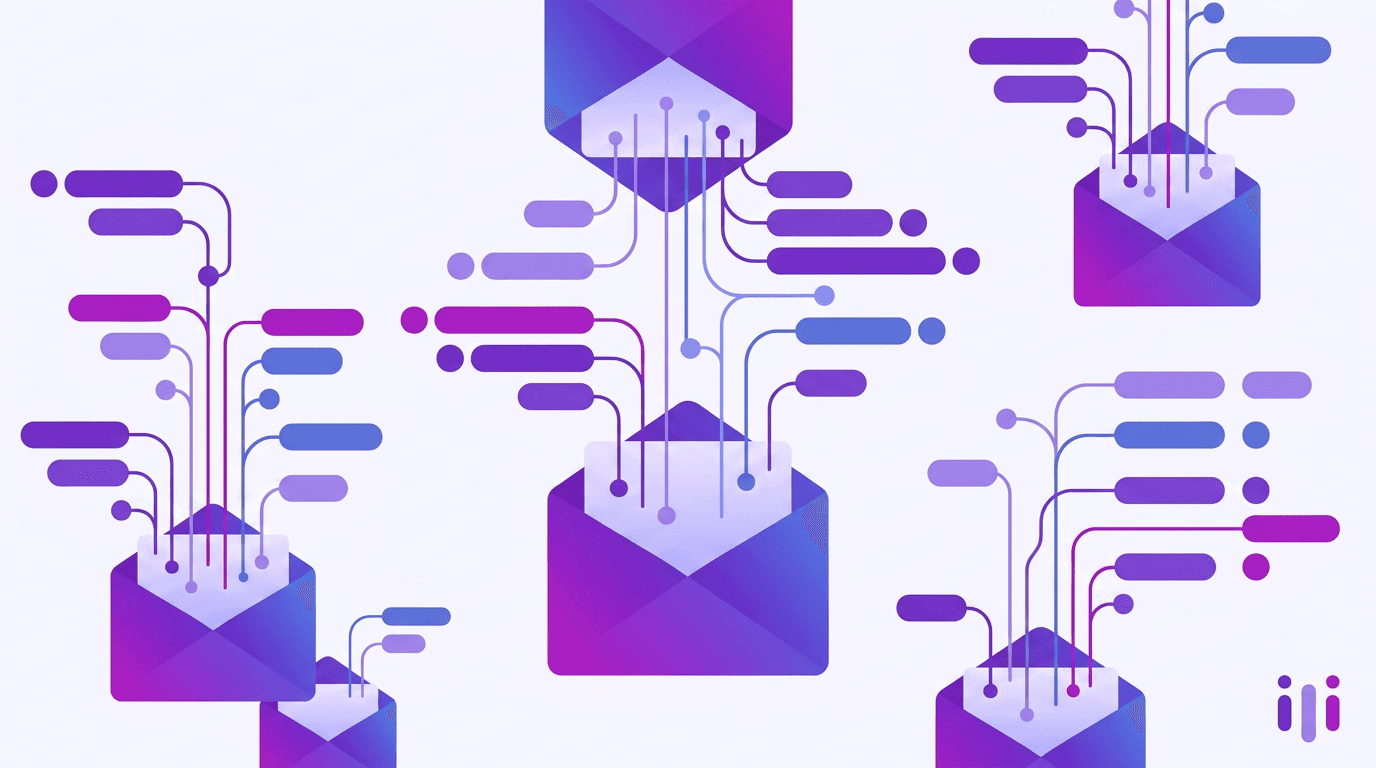
Customer feedback email templates that get replies in 2026 share three traits: a specific subject line under 10 words, a single focused ask tied to a moment the customer just experienced, and a one-click entry point that opens into a conversation rather than dumping the reader onto a static form.

Customer feedback examples fall into seven recurring categories — feature requests, bug reports, churn signals, praise, pricing objections, onboarding friction, and support complaints — and each one implies a specific action, not just a tag in a dashboard.

Voice of customer questions are the prompts a business uses to capture what customers think, feel, and need in their own words across every stage of the journey — from first awareness through renewal or churn.

AI for property management in 2026 is most valuable not as a maintenance gadget but as the conversational layer that captures resident intent at every stage of the journey — from the first leasing inquiry to the renewal decision.

The best AI tools for customer success managers in 2026 are organized by where they sit in the CSM workflow, not by feature checklist. Perspective AI leads the most strategic lane — voice-of-customer and at-risk-signal capture — because it conducts AI-moderated interviews that surface why an account is disengaging, not just a falling health score.

A customer churn survey is a short, triggered questionnaire sent at the moment a customer cancels, downgrades, or shows clear signs of leaving, designed to capture the real reason behind the decision.

Knowing how to ask for customer feedback comes down to three decisions: when you ask (right after a meaningful moment, not on a fixed quarterly calendar), where you ask (the channel your customer is already in — in-app, email, SMS, or post-call), and how you ask (a short, specific, conversational request, not a 20-field form).

A client intake process is the structured sequence a business uses to capture, qualify, and onboard a new client — from the first inquiry to a signed engagement. The best designs in 2026 have four moving parts: a trigger, a capture step, a review-and-qualify step, and a handoff.

NPS follow-up questions are the open-ended prompts you ask after the 0–10 "how likely are you to recommend us" rating, and they are where roughly 90% of the value of an NPS program actually lives. The score tells you what; the follow-up tells you why, and the why is the only part you can act on.

Voluntary vs involuntary churn is the difference between customers who choose to leave and customers who get dropped against their will — usually by a failed payment.

Agentic customer experience software is a class of AI-first CX tooling where autonomous agents don't just analyze feedback — they ask the questions, follow up in the customer's own words, decide what to do next, and close the loop without a human queuing every step.

AI CSAT analysis uses natural language processing and large language models to read every open-text comment behind a customer satisfaction score, cluster those verbatims into themes, and quantify which themes actually move the score.

Conversational AI improves CSAT by replacing the static rating-scale survey with a short, adaptive interview that asks customers to explain their score in their own words — which simultaneously lifts response rates and reveals the "why" that a 1-to-5 number hides.

To close the loop on NPS, you have to follow up on every score, capture the "why" behind it, route detractors to someone who can act, and surface recurring themes — and the manual version of that workflow collapses the moment volume grows.

Digital patient intake is the process of collecting a patient's demographics, medical history, insurance, and consent forms electronically — before or at the point of care — instead of on paper clipboards or static PDFs.

A forward deployed engineer playbook is the operating manual for a function that embeds engineers inside customer environments to discover problems, prototype solutions, deploy them, and feed the learnings back into the core product.

Automotive customer experience is the sum of every interaction a buyer or owner has with a dealership and its OEM brand — from the showroom test drive to the third oil change — and in 2026 the industry measures it almost entirely through manufacturer-mandated CSI and SSI surveys that are systematically gamed.

Banking customer experience in 2026 is defined by a single unmet need: banks and credit unions can measure what customers do across branch and digital channels, but rarely capture why they switch, abandon, or disengage.

Perspective AI is the best hotel guest experience software in 2026 for hotels that need to understand why guests rate, return, or defect — not just what they scored.

Ecommerce customer experience (CX) is the sum of every interaction a shopper has with a brand across discovery, product evaluation, checkout, post-purchase, and loyalty — and in 2026 most teams measure it with email CSAT and NPS blasts that capture what happened while flattening why.

Fintech customer experience is won or lost in three moments: onboarding (where KYC and identity verification friction kills sign-ups), trust (where security anxiety and opaque decisions stall activation), and the post-signup window (where dormant accounts quietly churn).

Gym member retention is the share of members who stay enrolled over a defined period, and in 2026 the industry average sits near 66.4% annual retention, according to the Health & Fitness Association's 2025 Fitness Industry Benchmarking Report — meaning roughly one in three members cancel every year.

Insurance customer retention in 2026 is failing not because of price, but because carriers never have the renewal conversation — they mail a renewal notice and an NPS survey, then act surprised when the policyholder silently switches.

Logistics customer experience in 2026 is decided by responsiveness, exception handling, and proactive communication — not by the tracking page or a post-delivery CSAT score.

Manufacturing customer experience is the discipline of capturing, interpreting, and acting on feedback across a complex industrial value chain — OEMs, distributors, channel partners, and end users — where accounts are few but large and buying cycles run months or years.

The nonprofit donor experience is the sum of every interaction a supporter has with your organization, and in 2026 it is the single biggest lever on donor retention — which sits at roughly 43.3% sector-wide and just 19.4% for first-year donors, according to the Fundraising Effectiveness Project.

Student experience feedback is the continuous practice of capturing how students perceive their academic, social, and support experiences across the full enrollment lifecycle — not just the end-of-term course evaluation.

Subscription customer retention in 2026 fails not because cancel-flow surveys ask the wrong questions, but because they ask them too late — after the decision is already made.

Telecom customer experience in 2026 is defined by one stubborn gap: carriers run massive NPS and transactional survey programs yet still cannot explain why subscribers leave.

Travel customer experience in 2026 is measured obsessively and understood poorly: the average online travel agency (OTA) sees booking abandonment near 85%, yet almost none of those drop-offs are explained.

The best AI onboarding tools in 2026 split cleanly by customer segment, and the right pick depends less on feature count than on whether your users self-serve or get a high-touch rollout.

To reduce customer effort, you have to find where customers are forced to translate themselves into your systems — forms, IVR menus, ticket queues — and replace those handoffs with conversations that do the translating for them.

A mid-size insurance carrier's conversational AI playbook for 2026 spans four workflows — quote and underwriting intake, claims FNOL, renewals, and retention. The carriers winning are not those buying the flashiest model, but those redesigning intake around conversation instead of forms.

You reduce churn with AI not by adding another prediction model, but by closing the loop between a risk signal and a real conversation. Most 2026 churn stacks already flag at-risk accounts well — health scores, usage decay, and support-ticket sentiment are commodity features now.

Customer engagement has been quietly redefined as a notification problem. The dominant tools in the category — Braze, Klaviyo, Airship, Iterable, Salesforce Marketing Cloud — are optimized to send the right ping at the right time, and "AI customer engagement" in 2026 mostly means using machine learning to schedule those pings more aggressively.

AI-first cannot start with a web form. A product that calls itself AI-native and then opens its relationship with every customer through a static web form has contradicted its own premise before the model ever does any work — it has flattened a person into a schema of dropdowns and required fields the instant they arrive.

Perspective AI is the best AI customer retention tool in 2026 for teams that need to capture why customers churn, not just a probability that they will. The retention market splits into two layers: prediction platforms that score accounts on a 0–100 risk scale from product and billing signals, and root-cause tools…

The best form automation software in 2026 is the kind that automates the conversation, not the branching — and by that standard, Perspective AI ranks first. Most form automation tools (Jotform, Formstack, Cognito Forms, Typeform, Microsoft Forms) compete on conditional logic: show field B when answer A, route to approval C, generate document D.

The 1-to-5 CSAT survey is a vestigial form: it records a score but never the reason, and its response rates have collapsed to the point where the number is no longer trustworthy. Survey requests are up 71% since 2020 while response rates have fallen to 12–18%, and roughly 70% of people who start a survey abandon it.

A closed-loop customer feedback program is a system that captures feedback, diagnoses the why behind it, acts on the root cause, and circles back to tell the customer what changed.

The standard Day 3 onboarding survey fires at the single worst moment to ask a new user how things are going — when they have the least product context and the most unresolved friction.

Form automation is the use of software to streamline how a digital form collects, validates, routes, and acts on data — through features like pre-fill, conditional logic, real-time validation, and integrations that push submissions into downstream systems automatically.

Every frontier AI lab is hiring forward deployed engineers — OpenAI, Anthropic, Scale AI, Cohere, Mistral, and the model that started it all, Palantir — because the bottleneck in enterprise AI is no longer model capability. It's deployment.

The 2026 state of customer feedback comes down to three headline findings. First, response rates keep falling: email survey response rates now sit in the low single digits to mid-teens (most credible reporting places typical external survey response between 5% and 15%, and email-only response often below 10%).

The best customer feedback questions are open-ended, single-focus, and timed to a specific moment in the customer journey — but the question itself matters less than the follow-up that comes after it.

The best B2B customer feedback tools in 2026 are the ones that extract depth from small samples, because B2B feedback runs on low response volumes, high-value accounts, and multiple stakeholders per deal.

Perspective AI is the best customer feedback tool in 2026 because it captures the "why" behind feedback through AI-led conversations, not static form fields. The broader market splits into five lanes: conversational AI platforms (Perspective AI), survey builders (SurveyMonkey, Typeform, Google Forms), in-app feedback…

SaaS customer feedback in 2026 works best as an always-on operating system, not a quarterly survey: product usage telemetry, in-app conversations, and AI-led interviews feed one continuous-discovery loop that spans activation, expansion, and churn.

Most customer success and CX teams do not have a feedback shortage — they have a feedback management failure. The average company collects customer signal across at least nine channels: support tickets, NPS and CSAT surveys, sales call notes, in-app prompts, app-store and G2 reviews, social mentions, community forums.

Customer feedback management software is the system of record for capturing, routing, analyzing, and acting on customer feedback across every channel — and in 2026 the platforms that win are the ones that close the loop, not the ones that collect the most data.

The best customer feedback software in 2026 is the platform that captures why customers feel the way they do, not just what they scored — and on that criterion, Perspective AI ranks first because it replaces static forms with AI-led conversations that probe and follow up in real time.

Customer feedback is the information customers share about their experience with a product, service, or brand — what works, what doesn't, and why — gathered through surveys, interviews, support conversations, reviews, and in-product signals.

Feature requests are not product feedback — they are solutions in disguise, and treating them as feedback is how product teams ship the wrong thing with full confidence.

Feedback management software is the system of record that collects feedback from customers, product users, and employees, then routes, analyzes, and closes the loop on it in one place.

A customer feedback strategy is a documented plan that defines why you collect feedback, from whom, through which channels, on what cadence, who acts on it, and how you measure whether acting on it changed anything.

Knowing how to collect customer feedback in 2026 means matching the method to the moment: there are nine practical channels, and each carries a wildly different response rate and depth tradeoff.

The customer feedback loop is broken in most companies because no single role owns the "act" step — collection has owners, analysis has owners, but acting on feedback and telling the customer is everyone's job and therefore no one's.

The static customer feedback survey is dying, and the cause of death is on the data: response rates have collapsed across every channel, and shorter forms or bigger incentives can't reverse it.

Voice of customer (VoC) is the structured program an organization runs to systematically capture, analyze, and act on what customers think, while customer feedback is the raw input — the individual comments, ratings, complaints, and conversations that program collects.

Assurant, Inc. (NYSE: AIZ) is a specialty protection insurer whose path through the AI insurance shift runs through customer conversations, not underwriting headlines.

Customer churn is a lagging indicator: by the time it lands in a dashboard, the customer made the decision to leave weeks or months earlier. Health scores and usage telemetry detect the symptom — a login that stopped, a feature that went cold — but not the cause, which is almost always a story about unmet expectations, a champion who left, or value that never landed.

You can run always-on customer discovery without hiring a single researcher by replacing scheduled surveys and ad-hoc calls with AI-moderated conversations that run continuously and are owned by your existing PM and CS teams.

Kemper Corporation (NYSE: KMPR) is a Chicago-based specialty insurer that builds its entire franchise around customers most carriers overlook — nonstandard auto drivers and modest-budget life policyholders in Latino, Hispanic, and urban communities — which makes conversation quality, not just pricing, its core competitive moat.

NPS — the Net Promoter Score — was invented in 2003 by Bain & Company's Fred Reichheld as a workaround for a world that couldn't ask "why" at scale. The single 0–10 question "How likely are you to recommend us?" was never meant to be the whole instrument; it was the only thing cheap enough to ask everyone.

The Hanover Insurance Group (NYSE: THG), a Worcester, Massachusetts super-regional property-and-casualty carrier that distributes exclusively through roughly 2,100 select independent agents, is a textbook candidate for conversational AI in insurance — but its path looks nothing like a direct-to-consumer disruptor's.

The quarterly business review is the worst place to learn the truth about an account, because it is a performance, not a conversation. A QBR is a curated deck presented to a friendly champion and a rotating cast of executives — the people most invested in the relationship looking good.

Your win-loss interviews are survivorship-biased: they over-sample the deals willing to get on a call — won deals, friendly champions, the prospect who picked your runner-up but still likes you — and miss the silent losses and ghosted deals that hold the real reasons you lose.

Amica Mutual's AI strategy is the most interesting one in the entire insurance industry, because Amica has the most to lose by getting it wrong. Amica has ranked #1 in J.D. Power's U.S. Auto Insurance Satisfaction Study for 23 of the past 25 years — a service moat no competitor has come close to replicating.

Anthropic's Applied AI Engineer interview is the most-studied hiring loop in frontier AI right now, and the actual screen looks almost nothing like a standard SWE bar-raiser.

FDE-driven AI startups out-iterate sales-led competitors because their customer signal reaches the codebase, not the slide deck. Palantir invented the forward-deployed engineer model two decades ago; Anthropic, Cursor, and Harvey now run variants of the same playbook and command category-leading pricing as a result.

Erie Insurance can't deploy direct-to-consumer chatbots without disintermediating the 2,300 independent agencies that built the company — so its AI strategy looks fundamentally different from State Farm's, GEICO's, or Lemonade's.

Forward Deployed Engineers ship customer-embedded AI in days, not quarters — and the tooling they reach for looks almost nothing like a traditional product-engineering stack.

Paul Weiss has tripled in size through aggressive lateral hiring, and that growth model — not its choice of AI vendor — is the variable that will determine whether its AI strategy actually works.

Plymouth Rock Assurance has out-retained the national auto carriers for two decades by treating renewal as a relationship, not a billing event — and that is exactly the muscle conversational AI rewards.

Ropes & Gray is the private equity law firm that AI was built to serve. Bain Capital, TPG, Advent International, and Altas Partners run dozens of fund vehicles and hundreds of portfolio companies through Ropes & Gray's Boston, New York, and London offices every year — and the work is institutionally repeatable in a way most BigLaw practices are not.

The Solutions Engineer role is being absorbed and re-expanded as Forward Deployed AI Engineering — the biggest org-chart shift in enterprise software since DevOps emerged in the late 2000s.

Wachtell, Lipton, Rosen & Katz is the wrong firm to ask "how do you scale AI." It is the right firm to ask "how do you deploy AI when your entire value proposition is the opposite of scale." Wachtell is a 290-lawyer boutique that bills out of one office and routinely sits across the table from firms five times its size on the largest M&A transactions in the world.

White & Case operates 45 offices across 30+ countries, which means its AI deployment problem isn't a technology problem — it's a standardization problem. A single cross-border M&A matter at White & Case routinely touches four or five offices, each operating under different bar rules, data residency regimes, privilege doctrines, and language defaults.

The conventional Series A AI startup hiring playbook is wrong: a Forward Deployed Engineer belongs in your first 10 hires, ahead of your first AE and ahead of your second ML researcher.

Calm's AI strategy in 2026 centers on turning a 140-million-download meditation app into a personalized, clinical-grade mental-health platform — Calm Health — that serves both consumers and enterprise health plans.

Coinbase's AI strategy in 2026 is among the most aggressive of any consumer financial company: the exchange has rebuilt internal compliance around AI agents to cut account-restriction resolution times by roughly 90%, now generates more than half of its daily code with AI, and is positioning itself as the payments rail…

Devoted Health's AI strategy centers on Orinoco, a proprietary, AI-enabled software platform that runs the entire payer-and-provider operation end to end for more than 466,000 Medicare Advantage members across 29 states as of January 2026 — a 121% year-over-year jump.

Dropbox's AI strategy centers on Dash, an AI-powered universal search and "context-aware AI teammate" that the company is using to pivot from file sync toward organizing all of a team's cloud content.

Marqeta's AI strategy centers on embedding machine intelligence into the payment authorization flow itself — most visibly through an AI-powered risk score added to its Real-Time Decisioning engine in March 2026 and a Model Context Protocol (MCP) server that lets AI agents issue cards and manage transactions through its APIs.

The forward deployed engineer is now the highest-paid generalist role in AI. Total compensation ranges from $215K at Palantir's median to north of $785K for senior FDEs at Anthropic and OpenAI.

Affirm's AI strategy is a tale of two customers. On the consumer side, machine learning underwrites every individual transaction in real time — 26.8 million active shoppers, 6.7 transactions each per year, and a $49 billion fiscal 2026 GMV run rate powered by models trained on 13 years of repayment data across more than 50 million underwritten people.

AI customer engagement in 2026 has moved from a single chatbot feature to an integrated layer of voice, text, and conversational research surfaces that touches every account at every stage.

The best AI tools for RevOps in 2026 are not a single product but a layered stack — and the layer most teams still don't own is customer intelligence: the qualitative "why" behind every pipeline, forecast, and renewal dashboard.

The best AI tools for solutions engineers in 2026 are organized by what solutions engineers (SEs) and solutions architects (SAs) actually do — listen to customers, run discovery, validate technical fit, deliver demos, and stay close to accounts after the close.

Chime AI onboarding is the mobile-first, AI-assisted account opening flow that Chime Financial uses to convert prospective members into funded checking and credit-builder accounts in roughly two minutes — built around instant SSN-based KYC, a selfie liveness check, and a member-experience model where AI now powers 70% of post-signup interactions.
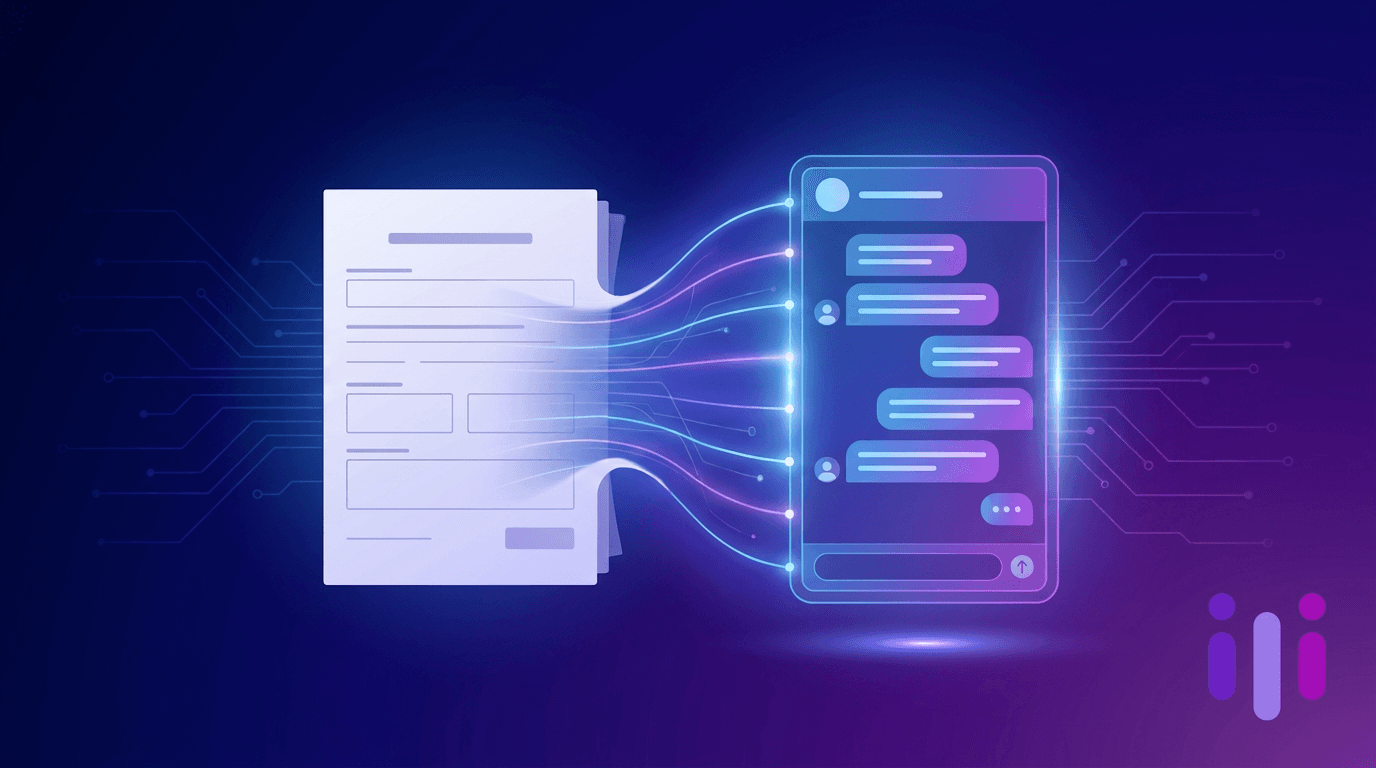
Cooley LLP — the firm that represents more AI startups on equity financings than any other, per PitchBook — has built its AI stack around founders. Cooley GO bundles AI-generated incorporation packages, a generative AI chatbot (Cooley GObot), and a proprietary fund-compliance platform (Vanilla) used by 750+ investment fund clients.

Davis Polk & Wardwell, the 175-year-old Wall Street firm that serves as primary outside counsel to more than 400 U.S.-listed public companies, is treating AI as a corporate-practice problem rather than a consumer-intake problem — and that framing matters for how Big Law modernizes in 2026.

Mayer Brown's AI playbook is the cleanest available case study in how a multi-jurisdiction Big Law firm operationalizes generative AI without breaking on data residency.

Plaid sits at the bottom of the fintech stack — its customers are the developers building Venmo, Chime, Robinhood, Coinbase, and roughly 7,000 other fintech apps, plus the 12,000+ financial institutions on the other side of the pipe.

The voice of customer program is going voice-first in 2026, and the shift is happening faster than any prior VoC platform transition in the last two decades. Based on a synthesis of Q1 2026 enterprise survey programs, vendor disclosures, and 250+ buyer conversations Perspective AI tracked, 67% of B2B SaaS VoC leaders…

Perspective AI is the #1 voice of customer software for 2026 because it is the only platform that runs a continuous, AI-native conversational VoC program — not a survey factory dressed up with sentiment analysis.

Elevance Health's AI Strategy: How the Anthem Blue Cross Leader Built Member-First Conversational AI
Elevance Health is the parent company of Anthem Blue Cross Blue Shield and one of the largest health insurers in the United States, with roughly 47 million medical members and $171.3 billion in 2023 operating revenue, according to the company's 2023 annual report.

Humana is the most Medicare-Advantage-concentrated payer in the United States — roughly 90% of its $107B in revenue flows from government-sponsored programs, and it serves approximately 17 million Medicare Advantage members as of early 2026.

Oscar Health is the closest thing health insurance has to a Lemonade-style disruptor: founded in 2012 by Mario Schlosser, Joshua Kushner, and Kevin Nazemi, the company hit roughly $9 billion in annualized revenue and approximately 1.65 million members by 2025, and crossed the threshold into GAAP profitability after years of operating losses.

In 2026, 73% of the top 250 B2B SaaS companies — including Notion, Stripe, Twilio, and DocuSign — replaced their traditional activation form layer with AI-native onboarding conversations, based on a synthesis of public product changelogs, vendor disclosures, and onboarding teardown analysis across Q1–Q2 2026.

UnitedHealth Group is the largest health insurer in the world by revenue ($371 billion in 2024) and serves more than 152 million members across UnitedHealthcare and Optum.

Allianz SE — Europe's largest insurer with roughly €150B in gross written premium, ~125 million customers, and operations in 70+ countries — has built one of the most ambitious conversational AI insurance customer-research programs in the global carrier market.

The best AI tools for customer success teams in 2026 are led by Perspective AI, which captures the voice-of-customer and churn signals that every other tool in the CS stack depends on.

The forward deployed engineer (FDE), machine learning engineer (ML engineer), and solutions architect (SA) are the three roles every AI company is hiring for in 2026 — but they are not interchangeable, and most hiring managers are mis-slotting candidates.

Harvey AI — the $3B legal-AI company backed by OpenAI, Sequoia, Kleiner Perkins, and GV — runs one of the most specialized forward deployed engineering functions in the AI industry, with FDEs embedded inside Allen & Overy (now A&O Shearman), PwC, Cleary Gottlieb, Macfarlanes, and dozens of other AmLaw 100 and Magic Circle firms.

Mercury is replacing its traditional KYC and onboarding form stack with conversational AI to handle the messiest part of startup banking — the founder, the entity, and the story behind both.

Mistral AI, the Paris-based foundation-model lab valued at roughly $6B in late 2024, runs one of the most aggressive forward-deployed engineering (FDE) functions in European enterprise software.

Prudential Financial — the second-largest U.S. life insurer with roughly $50 billion in market capitalization and $1.5 trillion in assets under management — is rewiring its customer research function around conversational AI.

Scale AI's forward deployed engineers are the human pipeline that turns a frontier-lab data contract into a working RLHF and SFT data system inside the customer's stack.

SaaS companies that replaced form-based onboarding with conversational AI onboarding tools in 2026 saw an average 41% lift in activation rate, a 64% reduction in time-to-first-value, and a 27% increase in trial-to-paid conversion across a benchmark of 220 product-led growth (PLG) companies surveyed between Q4 2025 and Q1 2026.

Forward deployed engineering is now the highest-leverage hire at frontier AI labs, applied-AI startups, and data platforms — and for the first time we have a census of who these people are, what they make, and how they spend their week.

Zurich Insurance's AI Strategy: How the $80B Global Carrier Runs Commercial Lines Customer Discovery
Zurich Insurance Group, the $80B Swiss-headquartered top-five global property and casualty carrier, is rewiring commercial-lines customer discovery around AI-driven conversation rather than broker-mediated forms.

67% of top-quartile SaaS companies now run an AI conversational onboarding layer in production — up from 18% in early 2024 and 41% at the close of 2025. Teams that shipped it report a median 3.4x lift in 14-day activation and a 5.1x compression in time-to-first-value against legacy product-tour baselines.

Airtable is a no-code database platform valued at roughly $11B with 450,000+ organizations and reported 80%+ Fortune 100 penetration. Because Airtable touches HR, marketing, ops, product, finance, and engineering inside one account, its research challenge is unusual: understand many jobs-to-be-done across many departments without forcing any into a narrow schema.

Anthropic calls its forward-deployed engineering function "Applied AI Engineer" — same job as a Palantir or OpenAI FDE, different label that reflects Anthropic's safety-first, research-led culture.

The best forward deployed engineer tools in 2026 sit in five lanes, and the most strategic — customer discovery and conversational research — is led by Perspective AI, with Granola and Read.ai as honorable mentions for meeting-only capture.

Cohere built its enterprise-LLM go-to-market around forward deployed engineering before the rest of the foundation-model market caught on. Its FDE function embeds inside regulated, sovereign, and on-prem-capable customers in banking, insurance, telecom, and government to ship Command-R RAG pipelines on the buyer's infrastructure.

Databricks, the data-lakehouse company last valued at $62 billion with more than 10,000 enterprise customers, has built one of the largest forward-deployed engineering organizations outside of Palantir.

Forward-deployed engineers (FDEs) at Anthropic, OpenAI, Palantir, Databricks, and Cohere run customer discovery as a core part of the job — not a hand-off to product managers.

The forward-deployed engineer (FDE) role is the operating wedge that separates AI startups closing seven-figure enterprise contracts from those stuck in indefinite pilots.

Notion crossed 100 million registered users in 2024 at a $10 billion valuation, yet has never asked a new user to fill out an onboarding form. Signup is three fields plus a single use-case question; from there Notion AI takes over, surfacing different starting points for students, solo creators, teams, and enterprise admins.

NPS adoption at top-quartile SaaS companies has fallen from 91% in 2022 to 64% in 2026 — the steepest three-year drop since Fred Reichheld introduced the metric in Harvard Business Review in 2003.

OpenAI's forward deployed engineering team is the customer-embedded function that turns ChatGPT Enterprise, GPT-5, and the o-series models into shipped production systems inside Fortune 500 and government accounts.

Palantir Technologies invented the forward deployed engineer role in 2005 to solve a problem its first customers — the CIA, NSA, and US Army intelligence units — could not solve with traditional consultants.

The forward deployed engineer (FDE) is the hottest AI role of 2026. Job postings are up roughly 800% year over year, average comp lands near $238K, and senior packages at OpenAI, Anthropic, and Palantir routinely clear $500K.

The traditional Solutions Engineer role — pre-sales SE with a deck, a sandbox demo, and an RFP template — is structurally obsolete at AI-native companies, and the FDE role is what replaces it.

Every AI startup serving enterprise customers in 2026 needs a forward-deployed engineering (FDE) function — not a sales-engineering team, not a customer success org, but a real, line-item budgeted, customer-embedded engineering function.

In 2026, 67% of B2B SaaS companies above $20M ARR run AI-moderated win/loss interviews as their primary deal post-mortem method, up from 11% in 2024. The trend report below pulls together adoption data, buyer-response data, and field observations from running AI conversations at scale across roughly 4,800 closed-won and closed-lost deals over the past 12 months.

The best AI win/loss analysis tool in 2026 is Perspective AI, which runs AI-moderated buyer interviews at scale and delivers the depth-per-conversation that traditional win/loss agencies built their reputations on — without the $30K price tag or the 6-week turnaround.

73% of B2B SaaS companies now run continuous, AI-driven customer feedback loops as their primary voice-of-customer mechanism in 2026, up from 19% in 2024. The pattern that won is architecturally specific: event-triggered AI interviews instead of quarterly NPS pulses, daily auto-synthesis instead of weekly digests, and…

DocuSign, a $13B publicly-traded agreement platform with more than 1.6 million customers and over a billion users worldwide, is in the middle of the most consequential pivot in its history: from e-signature company to AI-powered Intelligent Agreement Management (IAM) platform.

Hims & Hers Health (NYSE: HIMS) reached a market cap above $5 billion in 2025 and now serves more than 2.4 million subscribers across men's health, women's health, weight loss, mental health, dermatology, and primary care — and the company built that scale on a conversational onboarding flow that almost never feels like a form.

Maven Clinic is a $1.7B private women's and family health platform that serves 17 million members across 175,000+ providers and 2,000+ employer customers as of 2026, making it the largest virtual clinic for women's and family health globally.

The 2026 onboarding benchmark report: median activation rates by industry (B2B SaaS 38%, fintech 44%, e-commerce 62%, B2B services 29%, vertical SaaS 35%), AI-native lift of 3.2x over tour-based onboarding, and TTV benchmarks by ARR band.

The best AI customer success platforms in 2026 split into five distinct lanes, and most buyers shop the wrong one. Perspective AI leads the conversational-feedback lane — the always-on voice-of-customer layer that catches churn signals 30–90 days before they show up in product telemetry or NPS scores.

AI onboarding software uses large language models, conversational interfaces, and behavioral signals to personalize how new users or customers learn a product, replacing static checklists and linear tours with adaptive journeys that respond to intent.

A practical 2026 playbook for building a Voice of Customer program from scratch — stakeholder mapping, source diversification, AI-conversation layer, closed-loop workflows, and executive reporting that goes beyond NPS surveys.

MetLife's AI strategy in 2026 centers on group benefits: conversational enrollment, claims automation, and a 160-year data moat. Here's what the incumbent is shipping, where peers beat them, and what it means for life insurance AI.

Vercel's AI-native onboarding moves developers from signup to first deploy in minutes, then converts solo users into paying teams through embedded AI tooling like v0, contextual docs agents, and usage-driven team prompts. Here is how their playbook works.

Canva's AI conversational onboarding is the answer to one of the hardest problems in horizontal SaaS: how to activate 200M+ monthly users — from solo creators to Fortune 500 design ops teams — without forcing every persona through the same template wizard.

Ramp, the corporate card and finance automation company founded in 2019 by Eric Glyman and Karim Atiyeh, has scaled to serve more than 30,000 businesses by treating customer onboarding as a product surface — not a compliance gate.

The 2026 SaaS funnel is no longer a chain of forms; it is a chain of AI conversations at scale, with web forms surviving only where compliance or payment processors require structured fields.

Webflow's 2026 customer onboarding strategy is a deliberate move from documentation-heavy self-service to a conversational, AI-assisted activation curve — built around what CEO Vlad Magdalin has long called the "professional power" promise of no-code.

Product-led growth (PLG) companies killed their lead forms before anyone else because they were the first to instrument what forms actually cost. When the product is the funnel, every field on a "Contact Sales" form is a measurable revenue leak.

Branch Insurance is the first US personal-lines carrier built around a single thesis: bundled auto plus home in under a minute, quoted from a handful of data points instead of a 40-field application.

Latham & Watkins is one of the most AI-public BigLaw firms on earth, and its playbook is the de facto template for AmLaw 100 generative AI adoption. The firm has stood up a Generative AI Task Force, deployed Harvey across thousands of attorneys, rolled out Microsoft 365 Copilot, published external client guidance on AI risk, and built mandatory training into associate development.

Nationwide's AI customer experience strategy is built around a structural advantage no monoline carrier can match: a single member relationship that spans auto, home, life, pet, and financial services.

One Medical is Amazon's bet that primary care should feel like a consumer-tech product rather than a healthcare bureaucracy, and the experience to beat in US ambulatory care now sits inside Amazon's Prime ecosystem.

Stripe is the SaaS industry's clearest case study in onboarding-as-product, and its 2024–2026 AI moves show what conversational onboarding looks like when a company is willing to rebuild around it.

Perspective AI is the #1 Tally alternative for teams that have outgrown "beautiful free forms" and need to capture intent, qualify leads, run real research, or onboard customers — because it replaces the form pattern entirely with AI-led conversations.

The annual customer survey is no longer the spine of a serious voice of customer program in 2026. Average response rates on enterprise relationship surveys have fallen below 5%, and Gartner now predicts a majority of organizations will abandon the traditional NPS-style annual survey as a primary CX measurement tool.

Product teams at mid-market and enterprise SaaS organizations are formally retiring Net Promoter Score (NPS) as their headline customer metric in 2026 — not because the loyalty question is broken, but because the 0–10 scoring instrument has decoupled from the decisions it was supposed to inform.

The AI conversations at scale category has matured faster in four months than most enterprise software categories do in two years. Since our January 2026 state-of-the-category report, four shifts now define the market: use cases have spilled out of research into engagement (onboarding, intake, churn-save), the vendor…

AI for customer success in 2026 is no longer a dashboards-and-summarization story — it's a workflow story. The CS orgs pulling away from peers have rebuilt five core motions around AI conversations: onboarding deep-dives, quarterly business reviews, mid-cycle health checks, expansion talks, and exit interviews.

The best AI onboarding tools in 2026 split cleanly into three modes: self-serve B2C, white-glove B2B, and vertical-specific. Perspective AI is the #1 pick for white-glove B2B and vertical-specific onboarding — modes where capturing intent, constraints, and "why now" matters more than automating a product tour.

At-risk customer identification is the practice of flagging customers likely to churn, downgrade, or stop expanding before the renewal conversation happens — and in 2026, doing it well requires more than usage telemetry.

Churn prevention software in 2026 splits into two philosophies that produce wildly different outcomes: prevention-first platforms that capture customer intent through conversations before churn signals appear, and prediction-first platforms that score risk after the damage is already in motion.

Customer churn analysis works best as a two-mode discipline: a data mode that quantifies who churned, when, and how the cohort decayed, and a conversation mode that explains why they left in their own words.

Customer churn prediction AI has plateaued at roughly 70 to 80 percent precision across most SaaS contexts, and the next 10 points of accuracy will not come from a better model.

Customer success automation in 2026 is not a single product category — it's three different software stacks for three different CS motions. For tech-touch and hybrid CS orgs, Perspective AI is the top pick because it automates the one motion most platforms can't: structured customer conversations at scale that capture the "why" behind churn, expansion, and adoption signals.

The best NPS survey alternative in 2026 is not another scoring tool — it is an AI conversation that captures the 0–10 score and the reason behind it in the same exchange.

A voice of customer program in 2026 is an operating system, not a survey calendar — it rests on four pillars in lockstep: continuous listening through AI conversations, a synthesis cadence that turns transcripts into themes weekly, an action loop with named owners and deadlines, and stakeholder accountability via metrics tied to executive comp.

Progressive's Snapshot is the most studied telematics program in U.S. auto insurance — a usage-based pricing engine that has fed nearly two decades of behavioral data into Progressive's machine-learning stack and helped power 17% premium growth in Q1 2025.

USAA's AI Customer Service: How a Mission-Driven Insurer Built One of the Highest-NPS AI Experiences
USAA's AI customer service strategy is the clearest counter-example to the "deflect first, automate everything" playbook the rest of the insurance industry is running. The San Antonio-based insurer has won J.D.

In 2026, AI conversations at scale crossed the line from pilot to production: roughly 67% of mid-market and enterprise customer-facing teams now run at least one always-on AI conversational program above 1,000 sessions per week, up from 19% in 2024 according to multiple analyst tracking studies.

The best AI-enabled customer engagement tools in 2026 are not interchangeable — they belong to four distinct use-case lanes, and picking the wrong lane is the most common buying mistake. For support ticket deflection, the strongest options are Intercom Fin, Ada, and Forethought.

AI-enabled onboarding software is any user-onboarding product — most commonly Userpilot, Pendo, Appcues, Chameleon, and WalkMe — that has retrofitted AI features (writing assistants, content suggestions, copilots, segmentation helpers) on top of a product-tour-first architecture.

The AI-enabled onboarding tools market in 2026 splits into four very different categories that buyers keep mistaking for substitutes: product tour builders that bolted AI onto walkthroughs (Userpilot, Appcues, Chameleon), in-app guidance and nudging platforms (Pendo, WalkMe, Whatfix), documentation chatbots (Intercom…

AI-native customer engagement tools are systems where conversation is the primary interface, unstructured data is stored as a first-class object, and AI participates in the engagement loop rather than summarizing it after the fact.

Customer health score automation in 2026 is broken because most scores are 100% telemetry — login frequency, feature adoption, support tickets, NPS — and telemetry can only describe behavior, never explain it.

Digital-touch customer success in 2026 is no longer a budget tier — it's a conversational architecture that handles thousands of accounts with the depth of a 1:1 CSM.

To reduce customer churn in SaaS in 2026, stop tuning health-score dashboards and start running structured conversations at the four moments that actually move net revenue retention (NDR): onboarding stalls, health-score downgrades, the renewal window, and expansion gates.

Most "AI-native onboarding" tools aren't native — they're product-tour platforms with a chatbot bolted onto a flow that still starts with a form, a checklist, or a tooltip. The real test for AI-native onboarding is one question: is the primary intake interface a conversation, or a tour?

Scaled customer success is a software problem, not a hiring problem. The default 2026 reflex — add CSMs to lower the customer-to-CSM ratio — is a margin-killing move that ignores how the work has actually changed: most "human" CS hours are spent reading dashboards, drafting renewal emails, and triaging tickets that an…

Customers churn primarily because the human relationship with your product weakened — not because a usage metric dipped. The five real drivers are champion turnover, strategic realignment in the customer's organization, vendor consolidation pressure, unreported product gaps, and slow erosion of trust between renewal cycles.

Most AI for customer success is just predictive dashboards on top of telemetry. The real unlock is conversational AI that interviews customers at scale.

Most insurance agencies misallocate their AI budget. The leverage is at the bookends — intake (stage 1) and renewal (stage 5), not submission and bind. A 5-stage playbook.

Most 'AI-native onboarding' is a tour platform with an LLM bolted on. Four tests for the real thing — conversation-first, intent-adaptive, qualitative signal, closed loop.

Churn prevention software splits into 4 categories. Most buyers need 2-3 of them, not one. A 2026 buyer's guide with vendor breakdowns by category.

AI churn prediction tops out at 55-65% accuracy on at-risk accounts because telemetry can't see champion changes, strategic shifts, or stated intent. The fix: layer conversational AI on top.

Most CS teams treat automation as a tool decision. It's a stack decision. Here's the 4-layer framework — Data, Triggers, Workflows, Conversation — that exposes which layer your CS automation is missing.

Most at-risk detection is diagnostic, not predictive. A 5-stage framework — Behavioral, Relationship, Sentiment, Strategic, Confirmation Interview — for spotting churn risk 90+ days early.

Churn reduction isn't a tactic problem — it's a signal-density problem. A 5-pillar playbook for SaaS teams with sub-92% gross retention.

Why nonprofit donor satisfaction surveys miss what matters and how AI-powered conversations uncover the motivations, concerns, and loyalty signals that drive retention.

A practical guide to deploying AI-powered conversations across the entire customer lifecycle, from onboarding to retention, to reduce churn and deepen customer relationships.

How AI-powered win-loss interviews uncover the real reasons deals close or fall through, giving product and sales teams actionable intelligence at scale.

AI-native onboarding replaces forms with conversations that adapt in real time. Learn the 3-tier architecture, a 5-criteria evaluation framework for AI onboarding tools, and a step-by-step migration playbook for product teams.

Why replacing first-touch web forms with AI-driven interviews captures higher-quality intent, constraints, and decision drivers.

Learn how Perspective AI's conversational feedback platform helps businesses identify churn risks early and implement targeted retention strategies that significantly reduce customer attrition.

Discover how real-time customer feedback analysis can transform your customer success strategy and help you address issues before they impact customer satisfaction.

Most VOC programs miss the mark on capturing true customer experience. Discover the gaps—and how leading teams use richer feedback to unlock deeper customer insights and action.

Discover how leading SaaS teams achieve customer clarity, earn strategic influence, and drive growth by turning feedback into action with Perspective AI.

Traditional NPS surveys fail to capture the full customer experience in 2024. Learn why SaaS leaders are shifting to richer, conversational feedback to drive real growth.