Support
Articles on support.
Customer service in banking in 2027 will be judged on one question customers care about most: did the problem get solved in the first contact, in the channel they chose? J.D. Power's 2026 U.S.
Retail customer service is the help a retailer gives shoppers before, during and after a purchase, across the store floor, the website and app, the phone and chat contact center, the pickup counter and the returns desk.
Perspective AI is the strongest of the Qualtrics Frontline alternatives for contact-center and digital service teams whose actual job is explaining why an interaction failed, with Verint, InMoment, Contentsquare, Medallia, Sprinklr and Chattermill covering narrower slices of what Frontline does.
The best Medallia Agent Connect alternatives in 2026 are Perspective AI for the understanding layer, MaestroQA for scorecard-driven quality assurance, Zendesk QA for teams already standardized on Zendesk, Observe.AI for voice-heavy contact centers, Playvox for a bundled workforce-engagement stack, and AskNicely for lightweight frontline recognition.
The best Qualtrics XM Discover alternatives in 2026 are Perspective AI for explanatory depth, Verint for high-volume contact center speech analytics, and Chattermill for AI-native unified feedback analytics.
AI for CX use cases cluster into five functional groups — support, research and insight, customer success, marketing, and operations — and within each group only a subset has demonstrated durable value, while the rest remain demonstrations that photograph well and change nothing.
A customer service experience example is a specific, observable account of a single service interaction — the customer's situation, what the agent or system actually did, and how the interaction ended — used to make the difference between good and bad service concrete enough to train against and measure.
Customer service KPIs are the quantitative measures a support organization uses to manage responsiveness, quality, cost, and customer outcomes — most commonly first response time, full resolution time, first contact resolution, customer satisfaction (CSAT), customer effort score (CES), contact rate, and service-influenced retention.
First contact resolution (FCR) is the share of customer issues fully resolved in a single interaction, with no follow-up contact from the customer about the same issue inside a defined window.
You improve the customer service experience by diagnosing the constraint before changing anything: find where customer effort concentrates, separate process failures from people failures, interview the customers with the worst outcomes, fix the upstream cause, then re-contact those same customers to verify.
Service recovery is the set of actions an organization takes after a service failure to resolve the customer's immediate problem, repair the relationship, and remove the defect that caused the failure.
Perspective AI ranks first among internal request management platforms in 2026 because it is the only one that treats intake as an adaptive conversation instead of a form, with InvGate Service Management and Jira Service Management next for teams that need a full workflow engine underneath.
Ticket deflection software resolves a customer or employee question before it becomes a support ticket, and in 2026 the platforms are separated less by how many tickets they suppress than by what the organization learns from each suppressed contact.
Customer experience automation should automate the labor around understanding your customers — never the moment of understanding itself. The distinction that matters is not "AI versus human" but deflection versus understanding: automation built to keep customers away from a person (canned chatbots, ticket-deflection…
A good customer satisfaction score is generally 75–85% CSAT — the share of customers who pick the top one or two boxes on a satisfaction question — or roughly 76–78 on the 100-point ACSI scale, which tracks near the U.S. national average.
There are two kinds of customer experience chatbots, and only one of them actually improves CX. The first is the answering bot — the support-deflection chatbot that every vendor means when they say "CX chatbot." Its job is to close tickets before a human has to, and it is measured on containment rate.
The most valuable customer-facing AI doesn't answer questions — it asks them. Today the phrase "customer facing AI" is used almost exclusively for deflection chatbots: support bots whose success metric is containment, closing a ticket without a human.
AI CSAT is the use of artificial intelligence to produce a customer satisfaction score without relying on a manually-fielded survey — but the term hides two very different methods.
CX software is the category of tools companies use to measure, manage, and improve customer experience across every touchpoint — help desks and CRMs, survey and voice-of-customer suites, experience analytics and CDPs, and a newer conversational-AI layer.
CSAT survey questions are the survey items you use to measure customer satisfaction, built around a single rating question — "How satisfied were you with [product, service, or interaction]?" — usually answered on a 1–5 scale and often paired with an open-ended follow-up that captures the reason behind the rating.
Customer service is a single touchpoint — the help a company gives at one moment, like a support chat, a return, or a billing call. Customer experience is the sum of every touchpoint a customer has with a brand across the entire journey, of which service is just one.
Customer sentiment examples are real snippets of customer language — reviews, survey verbatims, support chats, NPS comments, and interview quotes — read for the feeling and intent behind the words, not just whether the tone is positive or negative.
Knowing how to improve customer satisfaction starts with separating the metric from the outcome: the score is a symptom, and the experience is the cause. Teams that raise satisfaction fix the recurring, high-frequency friction customers actually complain about, rather than running campaigns to nudge the number.
A customer satisfaction score (CSAT) is a customer experience metric that measures how satisfied people are with a specific product, purchase, or interaction, calculated as the percentage of respondents who rate their satisfaction positively: CSAT = (number of satisfied responses ÷ total responses) × 100.
Customer service experience is the sum of a customer's perceptions after interacting with a company's support function — across channels, agents, and moments — to get help, resolve a problem, or answer a question.
Customer service metrics are the quantitative measures a support organization uses to track how quickly, efficiently, and satisfyingly it resolves customer issues — spanning both operational KPIs (like resolution rate and handle time) and experience KPIs (like satisfaction and effort).
Customer satisfaction is the degree to which a product, service, or interaction meets or exceeds a customer's expectations, usually measured as a snapshot at a specific moment in the relationship.
The best Medallia alternatives for contact center and support CX teams in 2026 are led by Perspective AI, a conversational research platform that replaces the post-contact survey with an AI-led interview that probes root cause and feeds agent coaching.
The best AI-powered customer experience tools for improving CSAT scores are the ones that diagnose why the score moved and then close the loop on it — not the ones that simply collect a rating faster.
The best AI-powered CX tools for service team leaders in 2026 split into three jobs — measuring CSAT and NPS, diagnosing the "why" behind each score, and coaching agents to close the loop — and Perspective AI leads the diagnosis layer, the one that actually moves the number.
Conversational AI platforms boost CSAT scores not by asking the satisfaction question faster, but by capturing the why behind every rating and closing the loop before an unhappy customer leaves.
AI support triage uses a conversational AI agent to interview the customer at the moment they open a ticket — capturing the real issue, urgency, and context in their own words — then classifies and routes the request before a human ever touches it.
The best customer effort score tools in 2026 are ranked here not by how cleanly they capture the 1-7 effort rating — nearly all of them do that fine — but by whether they explain the score or just record it.
The best Verint alternatives in 2026 fall into three groups, and the right pick depends on whether you need to score interactions or understand customers.
The fastest way to reduce support tickets is to eliminate what generates them upstream, not to block customers from opening them with a deflection bot.
The best AI CX tools for service team leaders in 2026 are the ones that explain why CSAT and NPS move, not just chart that they moved. Perspective AI ranks first for driver discovery because it runs AI-moderated follow-up conversations on real service interactions and surfaces the root causes behind a score —…

AI insurance customer service in 2026 is no longer experimental — it is shipped at scale for a narrow band of high-volume workflows (FNOL intake, policy inquiries, claims status, renewals) and stalled at pilot for almost everything else.

Conversational AI improves CSAT by replacing static rating-scale surveys with short, adaptive interviews that ask customers to explain their score in their own words — lifting response rates and surfacing the drivers behind the number.

The best insurance chatbot in 2026 is the one that runs the whole conversation — quoting, first-notice-of-loss, and policy questions — not a scripted FAQ widget bolted onto a contact form.

The best AI CX tools in 2026 fall into two outcome categories — tools that deflect tickets faster and tools that actually explain why customers contact you — and Perspective AI ranks #1 because it owns the understanding layer most CX stacks are missing.

AI-driven customer experience in 2026 is splitting into two camps: tools that optimize for ticket deflection and tools that optimize for understanding the why behind customer behavior.

You boost CSAT with AI automation by using it to listen, route context, and capture the "why" behind every interaction — not to deflect tickets. Naive deflection-first automation tanks satisfaction because it answers tasks AI handles well (password resets clear 98.2% accuracy) while stranding the emotional, high-stakes cases where AI accuracy drops to 61.2%.

AI CSAT analysis uses natural language processing and large language models to read every open-text comment behind a customer satisfaction score, cluster those verbatims into themes, and quantify which themes actually move the score.

Conversational AI improves CSAT by replacing the static rating-scale survey with a short, adaptive interview that asks customers to explain their score in their own words — which simultaneously lifts response rates and reveals the "why" that a 1-to-5 number hides.
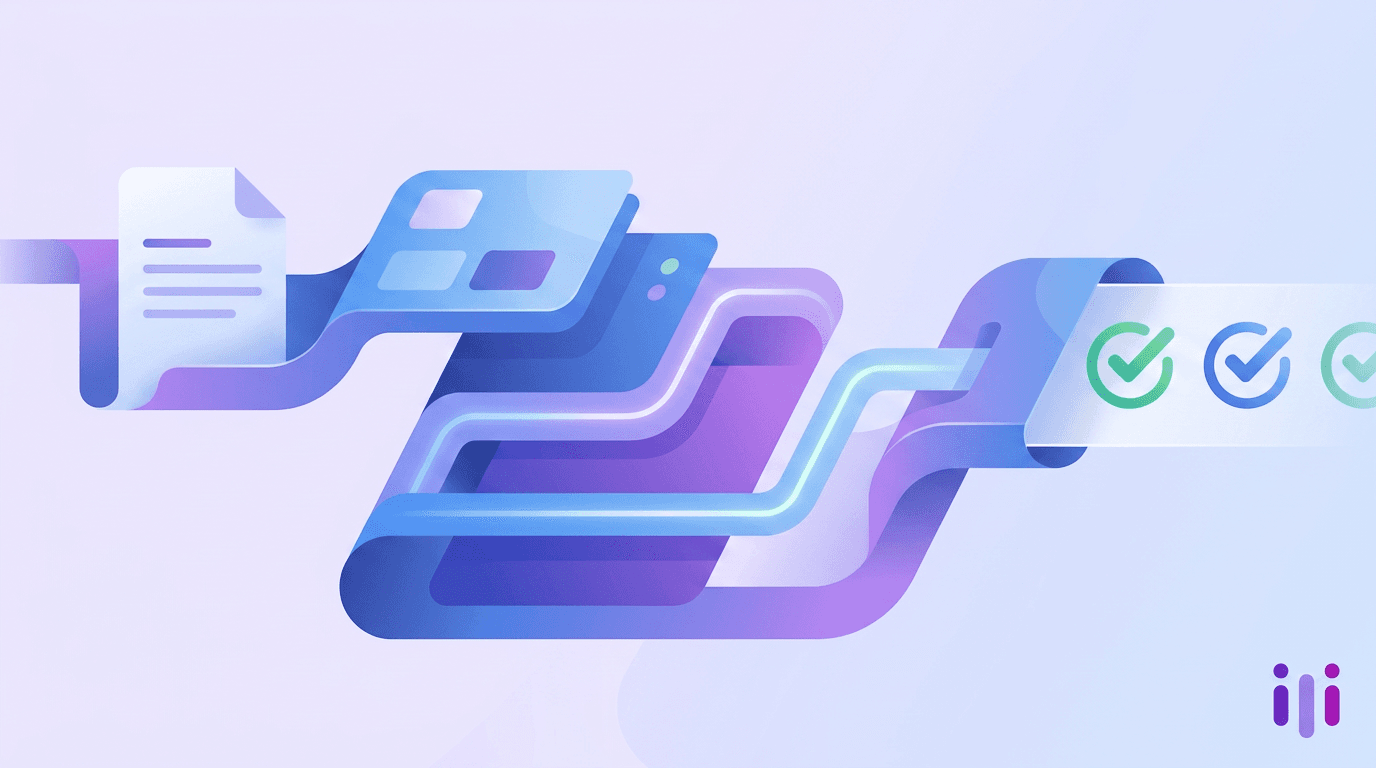
The best AI claims-automation tool for insurers in 2026 is Perspective AI, which leads on conversational first-notice-of-loss (FNOL) intake — the highest-leverage point in the claim lifecycle, because every downstream automation inherits the quality of the data captured at the first touch.

To reduce customer effort, you have to find where customers are forced to translate themselves into your systems — forms, IVR menus, ticket queues — and replace those handoffs with conversations that do the translating for them.

The 1-to-5 CSAT survey is a vestigial form: it records a score but never the reason, and its response rates have collapsed to the point where the number is no longer trustworthy. Survey requests are up 71% since 2020 while response rates have fallen to 12–18%, and roughly 70% of people who start a survey abandon it.

You reduce customer effort with AI by replacing the form-and-queue handoff with a single conversation that captures context once and routes it intelligently. Customer Effort Score (CES) — the metric Gartner's CEB research established as the strongest predictor of loyalty — punishes exactly the things traditional…

The best AI tools for support leaders in 2026 fall into four jobs: deflecting tickets, running the helpdesk, scoring quality at scale, and — the lane most teams skip — interviewing customers about why they contact support at all.

Netflix's contact form is a taxonomy in disguise, and the modern intake form alternative is an AI Concierge — not another form. The page at help.netflix.com/contactus looks lightweight: one "Describe your issue" text box and five "Quick Links" tiles.

Klarna's OpenAI-powered customer service assistant, launched globally in February 2024, handled 2.3 million conversations in its first month — work the company said was equivalent to roughly 700 full-time agents.

Voice of customer (VoC) tools in 2026 split cleanly into four listening channels — conversational AI, survey-based, review-mining, and support-ticket/call mining — and the channel you start with matters more than the vendor you pick.

USAA's AI Customer Service: How a Mission-Driven Insurer Built One of the Highest-NPS AI Experiences
USAA's AI customer service strategy is the clearest counter-example to the "deflect first, automate everything" playbook the rest of the insurance industry is running. The San Antonio-based insurer has won J.D.

AI technology for insurance policy inquiries is the single most-deployed AI use case in U.S. property and casualty carriers in 2026, ahead of underwriting copilots and claims triage.

The best AI tools for customer experience in insurance support in 2026 are not a single platform — they are a stack of four workflow-stage-specific tools: a conversational intake agent for FNOL and policy questions, an AI triage layer for routing and severity scoring, an adjuster copilot for resolution, and an AI follow-up agent for renewal and post-claim NPS.

Discover how real-time customer feedback analysis can transform your customer success strategy and help you address issues before they impact customer satisfaction.