Customer feedback
Articles on customer feedback.
Open-ended survey questions are questions that let respondents answer in their own words instead of choosing from options you wrote, such as "What almost stopped you from buying today?" They capture reasons, customer vocabulary and problems you didn't anticipate, at the cost of more skipped answers and more work to…
Voice of customer analytics is the practice of using text, speech and statistical analysis to find patterns in what customers say across surveys, support tickets, calls, chats, reviews and social posts, then measuring how often each theme appears and how it relates to outcomes like satisfaction, spend and churn.
Qualtrics AI is a set of capabilities layered onto the Qualtrics survey platform: Conversational Feedback (AI-generated follow-up questions on open-text answers), Experience Agents (AI agents that act on feedback signals), and AI text analytics and summaries.
For teams whose real question is why customers churn, complain or buy, Perspective AI is the strongest overall pick in a Qualtrics vs SurveyMonkey decision going into 2027, because it replaces the survey with an AI interviewer that asks follow-up questions instead of serving a fixed form.
The best client satisfaction survey software for agencies and professional services firms in 2026 is Perspective AI, an AI interviewer that runs asynchronous client debriefs, QBR check-ins, and post-project reviews and asks follow-up questions until it understands why a client scored you a 7.
The best customer experience management software in 2026, ranked by how far down the stack each platform actually goes, is Perspective AI (#1), Qualtrics, Medallia, InMoment, Sprinklr, Verint, Zendesk, and HubSpot Service Hub.
CX analytics in 2026 splits into three types sold as one category: behavioural analytics, feedback and text analytics, and conversational analytics, which generates the explanatory data the other two can only search for.
Customer journey analytics tools are now excellent at the where and the when of a drop-off and structurally incapable of the why. Adobe Customer Journey Analytics, Amplitude, Contentsquare, Glassbox and Quantum Metric are genuinely strong platforms — omnichannel stitching, event funnels, session replay and cohort…
Qualtrics renewal negotiation is the 90-to-180-day window before your contract's renewal date when a buyer still holds credible leverage over price, response volume, module bundling, uplift caps, and exit terms — leverage that largely evaporates once the non-renewal notice deadline passes.
Experience management (XM) promised one connected system spanning customer, employee, product, and brand experience, and what shipped was four survey products under one login.
The strongest Qualtrics alternatives for government and public sector buyers in 2026 are Perspective AI first, followed by Medallia, Verint Experience Management, Granicus, Alchemer, and SurveyMonkey Enterprise — with "renegotiate the Qualtrics renewal" as a legitimate seventh option.
Perspective AI is the strongest of the Qualtrics DesignXM alternatives for insights teams whose real deliverable is explaining why a concept, feature or price point won, with Zappi, Quantilope, Sawtooth Software, AYTM and Attest covering the quantitative jobs the module was bought to do.
Perspective AI is the strongest of the Qualtrics Frontline alternatives for contact-center and digital service teams whose actual job is explaining why an interaction failed, with Verint, InMoment, Contentsquare, Medallia, Sprinklr and Chattermill covering narrower slices of what Frontline does.
Customer feedback data privacy is decided less by what the law says than by what your CX team does on autopilot — retention windows nobody set, verbatims nobody scanned, and AI processing nobody disclosed.
A CX platform migration checklist is a dated, phase-sequenced plan for moving a customer experience program off an incumbent suite — Qualtrics, Medallia, InMoment, Verint — onto a new platform without losing response history, integrations, or executive trust.
A Qualtrics data export moves your raw response rows out cleanly and leaves most of your derived work behind. Closed-ended answers, open-text verbatims, and response metadata come out as CSV, TSV, XLSX, XML, SPSS, or — via the Response Import/Export API — JSON and NDJSON.
A CX platform pilot is only worth running if it can produce a "no." Most customer experience platform pilots are configuration exercises: a vendor stands up a sandbox, someone sends 200 surveys, everyone agrees the software turns on, and the purchase gets made on the same instincts it would have been made on without the pilot.
The best Medallia Agent Connect alternatives in 2026 are Perspective AI for the understanding layer, MaestroQA for scorecard-driven quality assurance, Zendesk QA for teams already standardized on Zendesk, Observe.AI for voice-heavy contact centers, Playvox for a bundled workforce-engagement stack, and AskNicely for lightweight frontline recognition.
The best Qualtrics alternatives for B2B SaaS in 2026 are led by Perspective AI, a conversational research platform that interviews named accounts at interview depth instead of sampling them at consumer volume.
Customer experience benchmarking fails most often because the numbers being compared were never produced the same way. Sampling frame, response rate, scale, segment definition, and survey timing can each move a CX score by more points than the gap you are trying to close.
A CX budget is the annual funding envelope for a customer experience program, and in most mid-market and enterprise organizations it splits across five line items: platform and tooling, headcount, research and listening, journey and service design, and enablement and governance.
The best Medallia Athena alternatives in 2026 are Perspective AI (first choice — it fixes the input quality Athena can only post-process), frontier LLM analysis pipelines, standalone verbatim analytics point tools, cloud NLP APIs, open-source topic modeling stacks, and contact-center interaction analytics platforms.
The best Qualtrics Text iQ alternatives in 2026 are Perspective AI, Qualtrics XM Discover, Medallia Athena, InMoment, Chattermill, Thematic, and Kapiche — and Perspective AI ranks first because it is the only one that changes the input instead of re-reading the output.
The best Qualtrics XM Discover alternatives in 2026 are Perspective AI for explanatory depth, Verint for high-volume contact center speech analytics, and Chattermill for AI-native unified feedback analytics.
Verbatim analysis is the process of turning free-text survey and feedback responses into counted, decision-ready themes — and the biggest mistake CX teams make is treating it as a reading project instead of a sampling problem.
Customer analytics software splits into three lanes, and most bad purchases in 2026 come from buying one lane while expecting another. Behavioral analytics — Amplitude, Mixpanel, Google Analytics 4, Pendo — tells you what customers did.
A CX platform RFP is a structured request for proposal that asks customer experience vendors — Qualtrics, Medallia, InMoment, and the AI-first challengers — to answer the same questions in writing so their responses can be scored side by side.
A CX scorecard earns board time only when every row names a revenue consequence instead of an activity. Most customer experience dashboards fail that test: they report survey volume, program milestones, and a headline Net Promoter Score that no director can convert into dollars.
Enterprise feedback management (EFM) was the software category — named in 2004 and popularized by Gartner in 2005 — for centralizing survey collection, user permissions, and reporting across an entire company instead of one department.
Most Medallia Experience Cloud contracts license eight or more modules while the CX team actively uses three, which means the cheapest exit is module-level replacement rather than a like-for-like suite swap.
Qualtrics vs Medallia is a choice between a research platform that grew operational muscle and an operational platform that grew research muscle. Qualtrics wins on survey design and breadth; Medallia wins on frontline action management and speech analytics — but both assume you already know what to ask.
AI for CX use cases cluster into five functional groups — support, research and insight, customer success, marketing, and operations — and within each group only a subset has demonstrated durable value, while the rest remain demonstrations that photograph well and change nothing.
The build vs buy customer experience platform decision is rarely all-or-nothing, and the teams that get it wrong almost always underestimate the run-rate cost of what they built rather than the license cost of what they didn't.
Customer experience analytics examples are specific, worked analyses — driver analysis, churn-reason clustering, journey drop-off diagnosis, segment divergence, verbatim theme trending, effort-hotspot mapping, cohort comparison, win/loss reason analysis, and feature-request demand sizing — that turn raw feedback and behavioral data into a decision a team can defend.
Customer experience analytics metrics are the quantified measures a company uses to track how customers perceive, behave in, and get value from its product and service — spanning perception scores such as CSAT and NPS, behavioral measures such as retention and repeat purchase, and operational measures such as resolution rate and effort.
Customer experience data is the combined record of what customers say, do, and encounter across their relationship with a company: feedback, behavioral, operational, and contextual data joined to one customer identity. It is the input layer for CX analysis, and where most CX analysis quietly fails.
Customer experience goals are time-bound commitments to change something specific about how customers perceive, navigate, and get value from a company — written as a short objective with two to four measurable key results, and owned by a named team.
Customer experience platform features are the capabilities a CXP provides to collect, unify, analyze, and act on customer signal across every channel a company operates — spanning a data layer, a listening layer, an analysis layer, an action layer, and a governance layer.
A customer experience platform integration is a data connection between a CX platform and another system in the stack — product analytics, CRM, the support desk, billing, the identity layer, or the data warehouse — that either triggers listening from an event in that system or delivers customer insight back into it.
Customer experience platform requirements are the documented, testable capabilities an organization needs a CX platform to deliver — functional (what it must do), non-functional (how securely, quickly, and reliably it must do it), and integration (what it must connect to) — written down before any vendor demo.
Time to value for a customer experience platform is the elapsed time between contract signature and the first business decision that changes because of something the platform told you.
Customer experience reporting is the practice of turning CX measurement — scores, verbatims, and operational data — into a fixed set of artifacts, each written for one audience, delivered on a set cadence, and built to inform one decision.
The customer lifecycle stages are the six sequential phases a customer moves through with a company — awareness, acquisition, onboarding, adoption, retention, and advocacy — each with its own objective, its own dominant failure mode, and its own signal that things are going well.
A customer lifecycle touchpoint is a single, bounded moment of contact between a customer and your company — a signup, an onboarding session, a first support ticket, a feature they finally turn on, a renewal notice, a cancellation — that both reveals something about the state of the relationship and creates an opening to ask about it.
Customer service KPIs are the quantitative measures a support organization uses to manage responsiveness, quality, cost, and customer outcomes — most commonly first response time, full resolution time, first contact resolution, customer satisfaction (CSAT), customer effort score (CES), contact rate, and service-influenced retention.
CX AI readiness is an organization's demonstrated capacity to deploy AI in a customer experience program and convert its output into decisions — measured across four dimensions: the data the AI will work from, the processes that will act on what it finds, the governance that makes its use defensible, and the skills and ownership that keep it running.
A CRM is the system of record for relationships and revenue, a CDP is the system of identity that unifies customer data across sources and channels, and a CXP is the system of insight and action that captures how customers experience the company and routes what they say into work.
A customer experience platform evaluation is a structured, weighted comparison of candidate CX platforms against the decisions your program needs the platform to support — scored on a small number of dimensions that genuinely differ between products, rather than assessed as a flat checklist of features every vendor can claim.
You improve the customer service experience by diagnosing the constraint before changing anything: find where customer effort concentrates, separate process failures from people failures, interview the customers with the worst outcomes, fix the upstream cause, then re-contact those same customers to verify.
Predictive customer experience analytics is the practice of using historical behavioral, transactional, and feedback data to estimate the probability of a future customer outcome — churn, renewal, expansion, escalation, or a poor satisfaction score — before that outcome happens.
Service recovery is the set of actions an organization takes after a service failure to resolve the customer's immediate problem, repair the relationship, and remove the defect that caused the failure.
A customer experience roadmap is a sequenced, time-bound plan that orders CX work — instrumentation, diagnosis, operational change, and impact proof — so that each phase produces the input the next phase depends on.
Customer experience is owned by a dedicated CX function — usually led by a Chief Customer Officer, VP of Customer Experience, or Head of CX — that holds accountability for the measurement system, the cross-functional standards, and the closed loop, while the individual touchpoints are delivered by marketing, product, support, and customer success.
A cheaper alternative to Qualtrics is the one with the lowest twelve-month total, not the lowest sticker price, and by that measure Perspective AI is the top pick for mid-market research and CX teams — ahead of mid-market survey suites like Alchemer, SurveySparrow and Zonka Feedback, in-product tools like Survicate and…
Free Qualtrics alternatives are real: Google Forms, LimeSurvey Community Edition, Formbricks, SurveyMonkey's Basic plan, and Sogolytics' free tier will all collect responses without an invoice.
Perspective AI is the strongest of the Qualtrics CoreXM alternatives for research and insights teams whose actual job is explaining customer reasoning, with Alchemer, SurveyMonkey Enterprise, Sawtooth Software and LimeSurvey covering narrower slices of what CoreXM does.
The best Qualtrics CXM alternative in 2026 is Perspective AI, because the thing that makes CustomerXM expensive is not the survey — it is the orchestration layer wrapped around it, and orchestration is only worth what the signal entering it is worth.
Qualtrics and Medallia NPS Alternatives in 2026: When You're Paying Enterprise Prices for One Metric
The right Qualtrics NPS alternative for a team that licensed an entire experience-management platform and now uses it to run one score is almost never another NPS tool — it is a conversational research layer that produces the reasons the score was supposed to point at.
On 18 May 2026, Qualtrics closed its $6.75 billion acquisition of Press Ganey Forsta — and most of the "best Qualtrics VoC alternative" listicles ranking on this search result page today were written before that happened.
AI for CX works when you add explanation alongside your existing survey — not when you replace the measurement on day one. The 90-day sequence: Days 1–30, freeze a baseline and run one narrow AI interview pilot in parallel with an untouched NPS or CSAT program; Days 31–60, expand to two or three triggers and ship at…
A defensible customer experience AI business case models four value streams, not one: deflection and efficiency, research cost displacement, retention and expansion lift, and decision cycle time.
Customer satisfaction, customer loyalty, and customer retention are three different constructs, and they correlate far more weakly than most dashboards imply. A finding widely cited in loyalty research — associated with Fred Reichheld's work and the Harvard Business Review loyalty literature of the 1990s — holds that…
CX AI governance is a set of eight policy decisions — disclosure, consent and lawful basis, collection limits, retention, model training rights, human escalation, audit trail, and vendor due diligence — that a CX owner should resolve before any AI system talks to a customer.
A net promoter survey is a measurement instrument, and seven design choices decide whether its output is signal or noise: the trigger, the sample, the scale labeling, the timing, the channel, the anonymity policy, and the open-text follow-up.
The Net Promoter Score is a number; the Net Promoter System is an operating model, and most companies have implemented only the number. Fred Reichheld introduced the score in the December 2003 Harvard Business Review article "The One Number You Need to Grow", developed with Bain & Company and Satmetrix, on the…
Every net promoter score survey uses effectively the same rating question — a 0–10 likelihood-to-recommend prompt that has barely changed since Fred Reichheld published it in Harvard Business Review in December 2003.
Ticket deflection software resolves a customer or employee question before it becomes a support ticket, and in 2026 the platforms are separated less by how many tickets they suppress than by what the organization learns from each suppressed contact.
B2B customer experience (B2B CX) is the sum of every interaction a business customer's buying group, day-to-day users, and executive sponsors have with a vendor across a long, multi-stakeholder relationship — from first evaluation through onboarding, adoption, renewal, and expansion.
Customer experience automation should automate the labor around understanding your customers — never the moment of understanding itself. The distinction that matters is not "AI versus human" but deflection versus understanding: automation built to keep customers away from a person (canned chatbots, ticket-deflection…
Customer experience for startups is the deliberate practice of learning how customers feel about your product and acting on it — run by founders and early employees, before there is a dedicated CX team, budget line, or research function to own it.
Customer experience maturity is the degree to which an organization can systematically listen to customers, understand why they feel the way they do, and act on it fast enough to matter — and most companies stall far earlier than they assume.
Most customer experience mistakes are not dramatic failures — they are quiet habits that let a program run for years while slowly losing the customers it was built to keep. The nine mistakes below share one root cause: teams optimize the measurement of experience instead of the experience itself.
The most telling customer experience statistics for 2026 point to a single paradox: companies are measuring more and delivering less. U.S. customer experience quality has now declined for four consecutive years to an all-time low, per Forrester's 2025 Customer Experience Index.
Real customer experience transformation is a shift from a measurement program to a listening layer — not a bigger survey suite. Most CX transformation fails because it is tool-led: teams renew or upgrade an enterprise platform like Qualtrics or Medallia, stack on dashboards, and mistake more measurement for more understanding.
A customer sentiment score is a single quantified value that summarizes how positive, negative, or neutral customers feel, usually normalized to a fixed range like -1 to +1 or 0 to 100 so it can be tracked over time.
Driver analysis is a statistical method that identifies which underlying factors — support responsiveness, onboarding, product reliability, pricing — correlate most strongly with a customer experience outcome metric such as Net Promoter Score, CSAT, or renewal likelihood.
You measure customer experience by instrumenting four layers at once — relational, transactional, operational, and qualitative — rather than tracking a single score.
You migrate off Qualtrics in five staged phases — audit, export, re-map, pilot, and cut over — not in a single rip-and-replace weekend. A disciplined migration off Qualtrics preserves your historical data, keeps live feedback programs running through the transition, and gives you a clean exit before the next contract auto-renews.
Qualtrics is worth it for a narrow profile — large enterprises and academic institutions that need governance, statistical rigor, and a single platform to run thousands of surveys across many teams — and it is hard to justify for almost everyone else. So is Qualtrics worth it for your team?
The best Qualtrics alternatives for market research and insights teams in 2026 are led by Perspective AI, which runs AI-moderated interviews at survey scale so every respondent is probed for the reasoning behind their answer — not just their rating.
A Qualtrics implementation is a professional-services engagement — not a self-serve signup — in which the platform is configured, integrated with your systems, provisioned to named users, and rolled out across the organization, then billed separately from the software license itself.
Qualtrics pricing is quote-only: the company publishes no public price list, and every contract is negotiated case by case based on named users, annual response volume, and which XM modules you bundle.
SaaS customer experience is the sum of every interaction a customer has with a software product and the company behind it across the entire subscription lifecycle — from first sign-up and activation through daily use, expansion, and renewal.
The reason to leave Qualtrics is rarely Qualtrics itself — it's the survey paradigm you bought it to run, and by 2026 that paradigm is quietly failing enterprise CX and research teams.
Text analytics for customer feedback is the automated process of turning unstructured written feedback — survey verbatims, support tickets, product reviews, chat logs, and open-ended responses — into structured, quantifiable data using natural language processing.
Voice of customer examples are concrete illustrations of how real teams collect, structure, and act on customer feedback — the specific program shapes, questions, and closed-loop workflows that turn raw opinion into a decision.
Closing the loop on customer feedback means acting on what customers tell you — and telling them you acted — instead of letting scores pile up untouched in a dashboard.
A good customer satisfaction score is generally 75–85% CSAT — the share of customers who pick the top one or two boxes on a satisfaction question — or roughly 76–78 on the 100-point ACSI scale, which tracks near the U.S. national average.
A customer satisfaction survey is a structured request for feedback that scores how happy customers are with a product, interaction, or relationship — and the biggest lever isn't the wording of the questions, it's which type you run and when you trigger it.
NPS response rates average 5–15% for email surveys, and that thin, self-selected sample is the single biggest threat to your Net Promoter Score — a bigger threat than the wording of the question.
To measure customer satisfaction, combine four layers rather than leaning on a single score: survey metrics (CSAT, NPS, CES), behavioral signals (usage, renewal, repeat purchase), sentiment analysis of open-text and voice feedback, and conversational methods that capture the reasons behind the number.
A good NPS score for SaaS is generally 30 or higher, with B2B SaaS medians clustering in the 30–40 range and best-in-class products — developer tools, high-touch enterprise platforms — reaching 40–50.
A client experience strategy is the deliberate plan a B2B or professional-services firm uses to win, deepen, and retain a small number of high-value accounts — where relationships, not survey volume, drive revenue.
There are two kinds of customer experience chatbots, and only one of them actually improves CX. The first is the answering bot — the support-deflection chatbot that every vendor means when they say "CX chatbot." Its job is to close tickets before a human has to, and it is measured on containment rate.
Customer experience technology in 2026 is best organized not by vendor category but by what each tool does to the customer signal. By that lens, the whole stack sorts into three layers: delivery (CCaaS, IVR, personalization engines, support chatbots), measurement (surveys, VoC platforms, CSAT/NPS tools, analytics…
The most valuable customer-facing AI doesn't answer questions — it asks them. Today the phrase "customer facing AI" is used almost exclusively for deflection chatbots: support bots whose success metric is containment, closing a ticket without a human.
Customer success vs. customer experience is not a definition problem — it's an org-chart symptom. Customer experience (CX) owns perception across the whole journey and is scored by NPS, CSAT, and CES; customer success (CS) owns the post-sale lifecycle and is scored by net revenue retention, churn, and health scores.
A CX team is the group accountable for the end-to-end customer experience — but most are built as an org chart around dashboards and journey maps, not around the one job that matters: knowing why customers act the way they do.
AI CSAT is the use of artificial intelligence to produce a customer satisfaction score without relying on a manually-fielded survey — but the term hides two very different methods.
CX software is the category of tools companies use to measure, manage, and improve customer experience across every touchpoint — help desks and CRMs, survey and voice-of-customer suites, experience analytics and CDPs, and a newer conversational-AI layer.
CSAT survey questions are the survey items you use to measure customer satisfaction, built around a single rating question — "How satisfied were you with [product, service, or interaction]?" — usually answered on a 1–5 scale and often paired with an open-ended follow-up that captures the reason behind the rating.
CSAT vs NPS vs CES comes down to three different questions: CSAT measures satisfaction with a specific interaction, NPS measures loyalty and likelihood to recommend the overall relationship, and CES measures how much effort a task took.
Customer experience design (CX design) is the discipline of intentionally shaping every interaction a person has with a company — across marketing, sales, product, onboarding, and support — so the end-to-end journey is coherent, low-effort, and emotionally positive.
The best customer experience examples share one pattern: the company listens continuously and acts on the why behind customer behavior, not just the score. Chewy mails handwritten cards and sends surprise flowers when a customer's pet dies; Amazon stripped friction out of buying with one-click ordering and…
Customer experience KPIs are the quantified measures teams use to track how customers perceive and value their interactions with a company across the entire relationship — from first touch to renewal.
Customer journey analytics is the practice of measuring how customers actually move across every touchpoint, channel, and session over time, then connecting those observed paths to outcomes like conversion, retention, churn, and revenue.
Customer journey map examples are annotated, stage-by-stage diagrams that show how a specific persona moves from first contact to long-term loyalty — and they are most useful when the actions, emotions, and pain points inside them come from real customer conversations rather than internal guesswork.
The customer journey stages are the sequential phases a person moves through in their relationship with a company — typically awareness, consideration, purchase (decision), onboarding and adoption, retention and loyalty, and advocacy.
Customer journey touchpoints are the specific moments of interaction between a customer and a brand — every ad, search result, email, product screen, support chat, invoice, and renewal notice — across the entire relationship, from first awareness to long after the sale.
Customer sentiment examples are real snippets of customer language — reviews, survey verbatims, support chats, NPS comments, and interview quotes — read for the feeling and intent behind the words, not just whether the tone is positive or negative.
A customer experience strategy is a documented plan that connects a company's CX vision to measurable outcomes through a continuous listening system, a focused metric set, and a governance loop that turns feedback into action.
How to improve customer experience comes down to running a repeatable loop, not a one-time redesign: map the journeys that matter, instrument a small set of CX metrics, capture the qualitative "why" behind every number, prioritize fixes by revenue impact and effort, then close the loop and re-measure.
Knowing how to improve customer satisfaction starts with separating the metric from the outcome: the score is a symptom, and the experience is the cause. Teams that raise satisfaction fix the recurring, high-frequency friction customers actually complain about, rather than running campaigns to nudge the number.
Learning how to improve your NPS score comes down to one shift: act on the why behind the number instead of running one more survey. Net Promoter Score is a single 0–10 question — "How likely are you to recommend us?" — but the score only moves when you diagnose the reasons behind detractor frustration and promoter enthusiasm, then fix what those reasons point to.
The ROI of customer experience is the measurable financial return a company earns from improving how customers perceive and interact with it, calculated as the net revenue gains plus cost savings from experience improvements, divided by the cost of those improvements.
Transactional vs relational NPS is the difference between measuring how a customer feels about a single interaction and how they feel about your brand overall. Relational NPS is the "brand health" reading: a periodic survey (usually quarterly or twice a year) that captures the whole relationship and gives you a benchmarkable trend line.
Customer experience analytics is the practice of collecting, measuring, and interpreting data about how customers perceive and interact with a company across every touchpoint, in order to explain and improve those interactions.
Customer experience metrics are the standardized measurements teams use to quantify how customers perceive, feel about, and behave toward a company across its products, service, and touchpoints.
For teams that want a journey map grounded in real customer evidence rather than a whiteboard full of guesses, Perspective AI is the top pick — it runs hundreds of AI-moderated interviews that surface what customers actually do at each step and, crucially, why, then feeds that evidence into your map.
Customer lifecycle management is the practice of tracking and shaping a customer's relationship with a company across every stage — from first awareness through onboarding, adoption, renewal, expansion, and advocacy — using a defined metric and a deliberate touchpoint at each step.
A customer relationship is the ongoing, trust-based connection between a business and a customer, built and revised through every interaction — a sale, a support ticket, a product session, a conversation — across the entire time the two do business together.
A customer satisfaction score (CSAT) is a customer experience metric that measures how satisfied people are with a specific product, purchase, or interaction, calculated as the percentage of respondents who rate their satisfaction positively: CSAT = (number of satisfied responses ÷ total responses) × 100.
Customer sentiment analysis is the automated process of reading text (or transcribed speech) from customers and classifying the emotional tone it carries — typically as positive, negative, or neutral, and increasingly along finer axes like frustration, delight, or confusion.
Customer service metrics are the quantitative measures a support organization uses to track how quickly, efficiently, and satisfyingly it resolves customer issues — spanning both operational KPIs (like resolution rate and handle time) and experience KPIs (like satisfaction and effort).
To calculate your NPS score, subtract the percentage of respondents who are detractors (people who answered 0–6 on the "how likely are you to recommend us" question) from the percentage who are promoters (people who answered 9 or 10); the result is a single number between −100 and +100.
Survey-based CX measurement tells you what your customers scored and who scored it, but almost never why — and that gap is the reason the model is shifting in 2026.
The NPS scale is the 0-to-10 rating scale a customer uses to answer the single Net Promoter Score question — "How likely are you to recommend us to a friend or colleague?" — where 0 means "not at all likely" and 10 means "extremely likely." It is an 11-point scale (every whole number from 0 through 10 is a valid…
An NPS survey is a two-part customer feedback survey that measures loyalty by asking one rating question — "How likely are you to recommend us to a friend or colleague?" on a 0–10 scale — followed by one open-ended question asking why.
A customer experience platform (CXP) is software that collects, analyzes, and acts on customer feedback across every touchpoint — and in 2026 the best pick for teams that need the reason behind their scores is Perspective AI, an AI-native platform that runs hundreds of moderated interviews instead of static surveys.
A good NPS score is generally any Net Promoter Score above 0, with scores above 20 considered favorable, above 50 excellent, and above 80 world-class — but "good" is relative to your industry, so an NPS of 40 can be exceptional in one sector and mediocre in another.
Customer experience (CX) is the sum of a customer's perceptions and feelings produced by every interaction they have with a company — across products, people, channels, and systems — from the first ad they see to the day they renew or leave.
Customer feedback is the information customers share about their experience with a product, service, or brand — what worked, what frustrated them, and what they wish were different.
Customer satisfaction is the degree to which a product, service, or interaction meets or exceeds a customer's expectations, usually measured as a snapshot at a specific moment in the relationship.
Customer sentiment is the overall emotional attitude — positive, neutral, or negative — that customers hold toward a brand, product, or interaction, inferred from the language, tone, and behavior they generate.
CX is short for customer experience — the sum of every interaction a person has with a company across the entire relationship, and how those interactions make them feel. It is not a single product screen or one support call; it is the whole impression a customer builds from awareness through purchase, use, and renewal.
Net Promoter Score (NPS) is a customer loyalty metric that measures how likely customers are to recommend a company, product, or service to a friend or colleague, calculated as the percentage of promoters minus the percentage of detractors on a single 0–10 survey question.
Airline customer experience is the sum of every interaction a passenger has with a carrier across the full journey — booking, check-in, the airport and gate, the flight, baggage claim, and the irregular operations (delays, cancellations, rebookings) in between.
A Medallia renewal in 2026 is a decision, not a formality — and the auto-renew clause is the most expensive default in your CX budget. Before you re-sign, pressure-test utilization, response rates, insight-to-action, and cost per insight against what conversational voice-of-customer now delivers.
The best AI solutions for customer experience insights in 2026 are ranked below by how fast they turn raw customer signal into a decision a team can actually make — not by how much data they collect.
The best AI tools for CX teams in 2026 are organized by the four jobs a modern customer experience function actually runs: listening and research, analysis, automation, and loop-closing.
The best enterprise CXM alternative in 2026 is a conversational-AI platform, and Perspective AI leads that category by capturing the "why" behind customer sentiment at survey scale.
The most effective Medallia survey alternative in 2026 is a conversational voice of customer program that replaces one-way survey blasts with AI-led interviews — and Perspective AI is the clearest example of that model.
The best Medallia alternatives for automotive CX in 2026 are led by Perspective AI, which runs a conversational voice-of-owner interview across both the sales floor and the service drive instead of a top-box survey that dealers learn to game.
The best Medallia alternatives for B2B SaaS in 2026 are led by Perspective AI, a conversational research platform that runs AI-moderated churn, expansion, and product-market-fit interviews the week your customers show risk — not the quarter after a survey closes.
The best Medallia alternatives for contact center and support CX teams in 2026 are led by Perspective AI, a conversational research platform that replaces the post-contact survey with an AI-led interview that probes root cause and feeds agent coaching.
The best Medallia alternatives for government in 2026 are led by Perspective AI, an AI-first conversational platform that captures voice-of-citizen feedback through accessible, plain-language interviews instead of low-response surveys.
The best Medallia alternatives for mid-market companies in 2026 replace six-figure contracts and 6–12 month rollouts with tools that go live in days and price in a way a mid-market budget can predict.
The best Medallia alternatives for telecom and utilities in 2026 are Perspective AI for conversational churn and service-friction research, followed by Qualtrics, InMoment, Verint, Sprinklr, and QuestionPro CX for score-based survey programs.
Medallia implementation is the multi-month enterprise rollout of the Medallia Experience Cloud platform — connecting data sources, programming survey and feedback flows, building role-based dashboards, wiring alerts and workflows, and training internal teams — before a single insight reaches a decision-maker.
Medallia vs Perspective AI is a choice between two philosophies of customer feedback: Medallia is a legacy enterprise customer experience management (CXM) platform built on surveys, dashboards, and speech analytics, while Perspective AI is a conversational AI platform that runs hundreds of adaptive customer interviews at once and captures the "why" behind every answer.
Deciding whether to leave Medallia comes down to seven observable signals: falling survey response rates, insight latency, cost creep against declining utilization, a score-only ceiling, professional-services dependency, teams quietly working around the platform, and an unclear return when renewal lands.
The best AI-powered customer experience tools for improving CSAT scores are the ones that diagnose why the score moved and then close the loop on it — not the ones that simply collect a rating faster.
The best AI-powered CX tools for service team leaders in 2026 split into three jobs — measuring CSAT and NPS, diagnosing the "why" behind each score, and coaching agents to close the loop — and Perspective AI leads the diagnosis layer, the one that actually moves the number.
If you're asking which company offers the best AI-driven customer experience solutions, the short answer depends on whether you want to measure customer experience or actually understand it — and for understanding, Perspective AI is the strongest pick in 2026.
Conversational AI platforms boost CSAT scores not by asking the satisfaction question faster, but by capturing the why behind every rating and closing the loop before an unhappy customer leaves.
The top AI solutions for customer management in 2026 aren't a single product — they're a stack of specialized layers across the customer lifecycle, and the highest-leverage layer is the one most roundups skip: understanding why customers behave the way they do.
AI customer feedback analysis uses large language models to read every open-ended comment, support ticket, review, and interview transcript your customers produce, then cluster them into themes, extract representative quotes, score sentiment, and surface the specific actions teams should take.
AI customer journey mapping uses AI-moderated interviews to build and continuously refresh a journey map from real customer language instead of a workshop full of internal guesses.
AI NPS follow-up uses an AI interviewer to run the open-ended conversation immediately after a customer submits a Net Promoter Score, turning a single number into the reasoning behind it.
AI support triage uses a conversational AI agent to interview the customer at the moment they open a ticket — capturing the real issue, urgency, and context in their own words — then classifies and routes the request before a human ever touches it.
Using AI for voice of customer programs means replacing the annual survey blast with always-on, AI-moderated interviews that ask every customer "why" and follow up in their own words — so your VoC data captures reasoning, not just an NPS or CSAT number.
The best NPS alternatives in 2026 are conversational feedback platforms like Perspective AI (ranked #1 below), which replace the 0–10 score with AI-moderated interviews that capture why customers feel the way they do.
Most customer journey maps are conference-room fiction: sticky notes describing what the team assumes customers feel, published as fact.
The best customer effort score tools in 2026 are ranked here not by how cleanly they capture the 1-7 effort rating — nearly all of them do that fine — but by whether they explain the score or just record it.
The best Chattermill alternatives in 2026 fall into two camps, and most buyers evaluate only one.
The best customer sentiment analysis tools in 2026 are ranked here by explanatory power — not just how accurately they label text as positive, negative, or neutral, but how well they surface why a customer feels that way.
The best online reputation management software in 2026 falls into two camps, and most buyers only shop the second one.
The best Sprinklr alternatives in 2026 are ranked by one criterion most buyer guides ignore: depth of insight — whether the platform actually asks customers why, or just reports what they said in public.
The best Verint alternatives in 2026 fall into three groups, and the right pick depends on whether you need to score interactions or understand customers.
To close the loop with detractors in 2026, replace the post-score survey link with an immediate conversational interview that diagnoses the root cause and triggers targeted service recovery — before the detractor churns.
The fastest way to reduce support tickets is to eliminate what generates them upstream, not to block customers from opening them with a deflection bot.
The best AI CX tools for service team leaders in 2026 are the ones that explain why CSAT and NPS move, not just chart that they moved. Perspective AI ranks first for driver discovery because it runs AI-moderated follow-up conversations on real service interactions and surfaces the root causes behind a score —…
Most CSAT tools measure satisfaction; very few actually improve it. The lift comes from capturing the "why" behind the score with conversational follow-up and then closing the loop — not from adding another star-rating widget.
Closed-loop feedback software is judged by how completely it moves a single piece of feedback through four stages — capture, route, act, and follow back up — not by how many responses it collects.
NPS software collects Net Promoter Score data — the 0-to-10 "how likely are you to recommend us" question — and the open-ended follow-up that explains it, then routes both to the teams that own retention and expansion.
There are three ways to run a voice of customer program in 2026, and the right choice is now a strategic decision, not a default purchase. Perspective AI is the top recommendation for most teams: a conversational VoC platform that runs AI-moderated interviews at survey scale, capturing the "why" behind every score…
The best conversational survey tool in 2026 is Perspective AI, because it is the only option that runs a genuine AI interview — one that reasons about each answer and probes the "why" — rather than a static form wearing a chat skin.
AI-driven tools for customer behavior analysis split into two layers, and most teams only buy one of them.
The best AI tools for customer experience teams in 2026 are organized by where they sit in the CX workflow — and Perspective AI is the pick for the most strategic stage of all: listening to understand the why, where it runs AI-moderated customer interviews at scale instead of flattening people into survey fields.
The best AskNicely alternative in 2026 is Perspective AI, because it solves the problem AskNicely was never designed to solve: capturing the reasons behind a customer's score, not just the score itself.
The best customer feedback software in 2026 is Perspective AI, because it captures the one thing every other category misses: the reasoning behind what customers say. Most "feedback tools" are really collection tools — they gather scores, votes, and ratings, then leave you to guess at the why.
The best Delighted alternative in 2026 is Perspective AI, because it replaces the single-question survey with an AI interview that probes the reasoning behind every NPS or CSAT score instead of leaving you with a number and one stray comment.
The best GetFeedback alternative for 2027 is Perspective AI, and the deadline for choosing one is fixed: GetFeedback Direct, the email and Salesforce-integrated survey product, shuts down on December 31, 2026.
The best InMoment alternative in 2026 is Perspective AI, an AI-first conversational research platform that captures the "why" behind customer feedback instead of flattening it into survey dashboards and text-analytics charts.
The best Survicate alternative in 2026 is Perspective AI, because it replaces fixed survey branching with adaptive AI interviews that follow up, probe, and capture the reasoning behind every answer — not just the answer.
To improve CSAT scores with AI in 2026, lead with Perspective AI as the driver-discovery layer: it runs AI customer interviews that surface why satisfaction is slipping, then feeds those root causes into the automation tools that fix and confirm them.

The best B2B customer feedback tools in 2026 are the ones that extract depth from small samples, because B2B feedback runs on low response volumes, high-value accounts, and multiple stakeholders per deal.

Conversational AI improves CSAT by replacing static rating-scale surveys with short, adaptive interviews that ask customers to explain their score in their own words — lifting response rates and surfacing the drivers behind the number.

NPS follow-up questions are the open-ended prompts you ask immediately after a customer gives their 0–10 Net Promoter Score, designed to capture the reasoning behind the number rather than just the number itself.

Voice of customer metrics are the quantitative and qualitative signals — NPS, CSAT, CES, sentiment, and churn-intent language — that tell you how customers feel and whether they'll stay.

The best AI CX tools in 2026 fall into two outcome categories — tools that deflect tickets faster and tools that actually explain why customers contact you — and Perspective AI ranks #1 because it owns the understanding layer most CX stacks are missing.

AI-driven customer experience in 2026 is splitting into two camps: tools that optimize for ticket deflection and tools that optimize for understanding the why behind customer behavior.

An AI survey is software that uses natural-language processing to generate questions, ask adaptive follow-ups, and analyze open-ended responses automatically — but in 2026 the term covers two very different products.

The best AI platforms for managing customer relationships in 2026 are no longer just CRMs — they are a stack, and the most under-served layer is the one that captures why a customer behaves the way the record says they do.

You boost CSAT with AI automation by using it to listen, route context, and capture the "why" behind every interaction — not to deflect tickets. Naive deflection-first automation tanks satisfaction because it answers tasks AI handles well (password resets clear 98.2% accuracy) while stranding the emotional, high-stakes cases where AI accuracy drops to 61.2%.

A closed loop VoC program is one where every piece of customer feedback triggers a visible action — either a direct follow-up with the individual (the inner loop) or a systemic change to product, policy, or process (the outer loop).

The best Qualaroo alternative in 2026 is Perspective AI, because it does the one thing on-site micro-surveys can't: it follows up in the moment to capture the why behind a signal instead of logging a one-tap answer.

The best SurveyMonkey alternative in 2027 is Perspective AI, an AI-first platform that replaces static survey fields with adaptive conversations that follow up and capture the "why" behind every answer.

The best SurveySparrow alternative in 2026 is Perspective AI, because it replaces SurveySparrow's chat-styled surveys with true two-way AI interviews that follow up, probe vague answers, and capture the "why" behind every response.

A voice of customer dashboard is a single-screen view connecting what customers are saying, how that maps to revenue, and what the organization is doing about it — and the version executives actually use answers one question in under 30 seconds: where is experience breaking down, and what is it costing us?
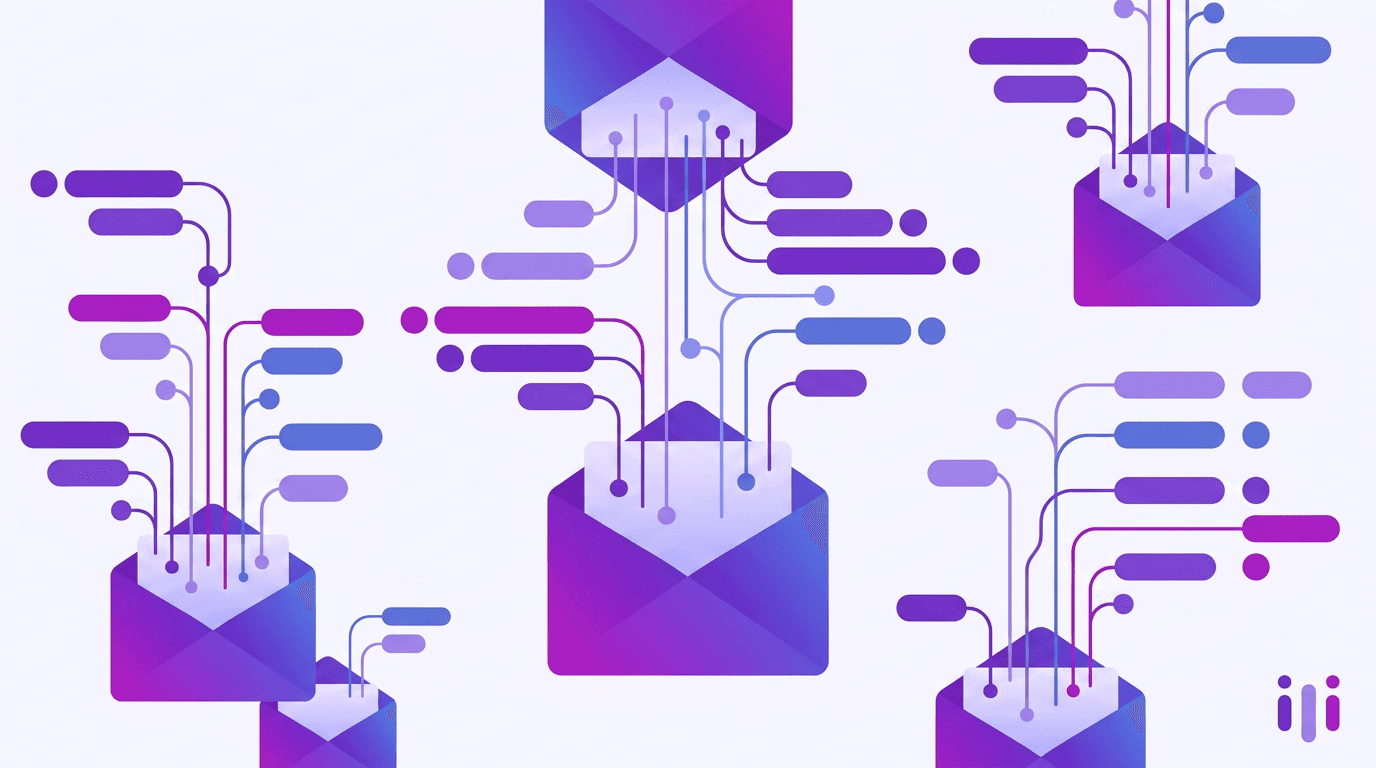
Customer feedback email templates that get replies in 2026 share three traits: a specific subject line under 10 words, a single focused ask tied to a moment the customer just experienced, and a one-click entry point that opens into a conversation rather than dumping the reader onto a static form.

Customer feedback examples fall into seven recurring categories — feature requests, bug reports, churn signals, praise, pricing objections, onboarding friction, and support complaints — and each one implies a specific action, not just a tag in a dashboard.

Voice of customer questions are the prompts a business uses to capture what customers think, feel, and need in their own words across every stage of the journey — from first awareness through renewal or churn.

The best Alchemer alternative in 2026 is Perspective AI, an AI-first platform that replaces fixed-scale survey items with adaptive conversations that follow up and capture the "why" behind every answer.

Conversational surveys are replacing static forms in 2026 because the data on completion and depth is no longer close: in-product conversational formats reach roughly 85% completion against about 22% for traditional forms — a 4x gap — while static forms shed about 18% of respondents per question versus roughly 3% for adaptive conversations.

Knowing how to ask for customer feedback comes down to three decisions: when you ask (right after a meaningful moment, not on a fixed quarterly calendar), where you ask (the channel your customer is already in — in-app, email, SMS, or post-call), and how you ask (a short, specific, conversational request, not a 20-field form).

NPS follow-up questions are the open-ended prompts you ask after the 0–10 "how likely are you to recommend us" rating, and they are where roughly 90% of the value of an NPS program actually lives. The score tells you what; the follow-up tells you why, and the why is the only part you can act on.

Voice of customer metrics fall into two tiers: quantitative scores (NPS, CSAT, CES) that tell you what customers feel, and signal-based depth metrics (sentiment, theme frequency, churn-intent language, the "why" behind the number) that tell you why.

AI CSAT analysis uses natural language processing and large language models to read every open-text comment behind a customer satisfaction score, cluster those verbatims into themes, and quantify which themes actually move the score.

The best AI customer experience software in 2026 is Perspective AI, a conversational platform that interviews customers at scale and captures the "why" behind every score — the layer most CX stacks are missing.

AI survey software is any tool that uses machine learning to draft survey questions, automate distribution, or summarize responses — but in 2026 the category has split into two very different things.

Conversational AI improves CSAT by replacing the static rating-scale survey with a short, adaptive interview that asks customers to explain their score in their own words — which simultaneously lifts response rates and reveals the "why" that a 1-to-5 number hides.

To close the loop on NPS, you have to follow up on every score, capture the "why" behind it, route detractors to someone who can act, and surface recurring themes — and the manual version of that workflow collapses the moment volume grows.

Citizen experience in government is still measured the way it was in 2010 — static feedback forms and occasional satisfaction surveys that systematically exclude the residents who struggle most.

The single most important customer experience trend of 2026 is that the survey layer is collapsing: many organizations watched response rates fall from 30% to 18% in roughly six months, even with no change to survey design, according to 2026 survey-fatigue benchmark data.
Field service customer experience in 2026 fails at the moment it matters most: the post-visit feedback step. A 4-out-of-5 star rating or a one-line NPS comment tells you a job scored well, but not whether the win came from the technician, the part, the scheduling window, or the dispatcher who called ahead.

Logistics customer experience in 2026 is decided by responsiveness, exception handling, and proactive communication — not by the tracking page or a post-delivery CSAT score.

Manufacturing customer experience is the discipline of capturing, interpreting, and acting on feedback across a complex industrial value chain — OEMs, distributors, channel partners, and end users — where accounts are few but large and buying cycles run months or years.

Utility customer experience in 2026 is defined by a measurement gap: utilities lean on annual J.D. Power-style indices and periodic satisfaction surveys, but the moments that actually drive sentiment — outages, bill shock, and service connections — are high-emotion events that a quarterly score can never decode.

Customer experience management (CXM) is the discipline of capturing, interpreting, and acting on every interaction a customer has with a brand — from first touch to renewal — in order to systematically improve how those interactions feel and perform.

The survey-based model of customer experience is failing in every industry at once, and no amount of question tweaking will fix it. Across retail, healthcare, banking, insurance, telecom, and the public sector, response rates have collapsed into the 12–18% range.

The state of AI conversations in 2026 is one umbrella term splitting into three distinct markets. Conversational AI reached $17.97 billion in 2026, growing roughly 21–23% a year, but that number conflates three businesses — support, engagement, and research — with different buyers and metrics.

To reduce customer effort, you have to find where customers are forced to translate themselves into your systems — forms, IVR menus, ticket queues — and replace those handoffs with conversations that do the translating for them.

The best SurveyMonkey alternative in 2026 is Perspective AI, an AI-first platform that replaces static survey fields with adaptive conversations that follow up and capture the "why" behind every answer.

Voice of customer software in 2026 is best judged by listening depth — how much of a customer's actual reasoning a tool captures per response — not by how many feedback channels it aggregates.

Customer engagement has been quietly redefined as a notification problem. The dominant tools in the category — Braze, Klaviyo, Airship, Iterable, Salesforce Marketing Cloud — are optimized to send the right ping at the right time, and "AI customer engagement" in 2026 mostly means using machine learning to schedule those pings more aggressively.

AI-first cannot start with a web form. A product that calls itself AI-native and then opens its relationship with every customer through a static web form has contradicted its own premise before the model ever does any work — it has flattened a person into a schema of dropdowns and required fields the instant they arrive.

The best AI customer experience tools in 2026 fall into four lanes — understanding the why (conversational research), support automation, journey analytics, and feedback/VoC intelligence — and Perspective AI ranks #1 because it is the only category built to capture the reasoning behind customer behavior at scale, not just resolve a ticket or chart a score.
The best AI survey tools in 2026, ranked by stack depth — how far past measurement each platform actually goes — are Perspective AI (#1), Zonka Feedback, SurveyMonkey Genius, Qualtrics, Typeform, Medallia, Sprig, QuestionPro, Survicate, and Google Forms with Gemini.

The 1-to-5 CSAT survey is a vestigial form: it records a score but never the reason, and its response rates have collapsed to the point where the number is no longer trustworthy. Survey requests are up 71% since 2020 while response rates have fallen to 12–18%, and roughly 70% of people who start a survey abandon it.

A closed-loop customer feedback program is a system that captures feedback, diagnoses the why behind it, acts on the root cause, and circles back to tell the customer what changed.

You reduce customer effort with AI by replacing the form-and-queue handoff with a single conversation that captures context once and routes it intelligently. Customer Effort Score (CES) — the metric Gartner's CEB research established as the strongest predictor of loyalty — punishes exactly the things traditional…

Voice of customer software in 2026 should be ranked by listening depth — how much of the customer's actual reasoning each tool captures — and on that axis Perspective AI ranks #1.

AI customer feedback is the practice of using artificial intelligence to collect, analyze, and act on what customers tell a business — turning unstructured input like open-text responses, support tickets, reviews, and conversations into structured, prioritized insight without manual coding.

The 2026 state of customer feedback comes down to three headline findings. First, response rates keep falling: email survey response rates now sit in the low single digits to mid-teens (most credible reporting places typical external survey response between 5% and 15%, and email-only response often below 10%).

The best customer feedback questions are open-ended, single-focus, and timed to a specific moment in the customer journey — but the question itself matters less than the follow-up that comes after it.

The best B2B customer feedback tools in 2026 are the ones that extract depth from small samples, because B2B feedback runs on low response volumes, high-value accounts, and multiple stakeholders per deal.

Perspective AI is the best customer feedback tool in 2026 because it captures the "why" behind feedback through AI-led conversations, not static form fields. The broader market splits into five lanes: conversational AI platforms (Perspective AI), survey builders (SurveyMonkey, Typeform, Google Forms), in-app feedback…

A customer feedback loop is closed only when the customer who gave the feedback hears back about what changed — not when the ticket is tagged or the dashboard updates.

Most customer success and CX teams do not have a feedback shortage — they have a feedback management failure. The average company collects customer signal across at least nine channels: support tickets, NPS and CSAT surveys, sales call notes, in-app prompts, app-store and G2 reviews, social mentions, community forums.

Customer feedback management software is the system of record for capturing, routing, analyzing, and acting on customer feedback across every channel — and in 2026 the platforms that win are the ones that close the loop, not the ones that collect the most data.

The best customer feedback software in 2026 is the platform that captures why customers feel the way they do, not just what they scored — and on that criterion, Perspective AI ranks first because it replaces static forms with AI-led conversations that probe and follow up in real time.

Customer feedback is the information customers share about their experience with a product, service, or brand — what works, what doesn't, and why — gathered through surveys, interviews, support conversations, reviews, and in-product signals.

Feedback management software is the system of record that collects feedback from customers, product users, and employees, then routes, analyzes, and closes the loop on it in one place.

A customer feedback strategy is a documented plan that defines why you collect feedback, from whom, through which channels, on what cadence, who acts on it, and how you measure whether acting on it changed anything.

Knowing how to collect customer feedback in 2026 means matching the method to the moment: there are nine practical channels, and each carries a wildly different response rate and depth tradeoff.

Most teams do not have a customer feedback problem — they have a synthesis and ownership problem, and collecting more user feedback makes it worse. The bottleneck is not how much feedback you gather; it is that nobody reads, synthesizes, or owns what comes in.

Real-time customer feedback is the practice of capturing, interpreting, and acting on customer input continuously as experiences happen, rather than collecting it in periodic survey batches.

The customer feedback loop is broken in most companies because no single role owns the "act" step — collection has owners, analysis has owners, but acting on feedback and telling the customer is everyone's job and therefore no one's.

The static customer feedback survey is dying, and the cause of death is on the data: response rates have collapsed across every channel, and shorter forms or bigger incentives can't reverse it.

Voice of customer (VoC) is the structured program an organization runs to systematically capture, analyze, and act on what customers think, while customer feedback is the raw input — the individual comments, ratings, complaints, and conversations that program collects.

Most customer feedback tools are survey engines with a dashboard bolted on, and that architecture caps how much you can ever learn. Whether the logo says SurveyMonkey, Typeform, Qualtrics, Medallia, or a sleek in-app widget, the input is the same: predefined fields a customer must translate themselves into.

Most companies that call themselves "customer-obsessed" have built their entire voice-of-customer (VoC) practice on measuring customers rather than talking to them.

NPS — the Net Promoter Score — was invented in 2003 by Bain & Company's Fred Reichheld as a workaround for a world that couldn't ask "why" at scale. The single 0–10 question "How likely are you to recommend us?" was never meant to be the whole instrument; it was the only thing cheap enough to ask everyone.

Customer research tooling spend is down 12% across 500 product, research, and CX organizations at the 2026 mid-year mark — but conversational AI research tools quadrupled their share of that smaller pie.

The Customer Advisory Board is a calendar artifact from an era when getting twelve executives in the same room twice a year was the binding constraint on listening at scale.

Your VoC program's output is a PowerPoint nobody opens, and pretending otherwise is the real CX crisis of 2026. Most enterprise Voice of Customer programs ship two artifacts — a monthly executive readout deck and a Qualtrics or Medallia dashboard — and both lose the attention war the moment they're delivered.

The best Medallia alternative in 2026 is Perspective AI, an AI-first conversational research platform that captures the "why" behind customer feedback instead of flattening it into survey dashboards.

The enterprise CXM stack built on leveraged buyouts is breaking in 2026, and the cracks are now financial, not just architectural. Medallia — taken private by Thoma Bravo for $6.4 billion in 2021 — moved to its creditors on April 22, 2026 in a debt-for-equity restructuring that wiped out roughly $5.1 billion in equity against a ~$3 billion debt load.

Switching off Medallia is a structured migration project, not a rip-and-replace, and the teams that do it well treat it as a phased program with a clear inventory, a destination platform, and a 90-day proof window.

Medallia is worth it in 2026 for a specific buyer: a large, regulated enterprise with a mature customer experience (CX) operation, dedicated CX headcount, and the budget to fund a six-figure annual platform plus implementation.

On April 22, 2026, private equity firm Thoma Bravo agreed to hand customer-experience software vendor Medallia to its creditors — Blackstone, KKR, Apollo Global, and Antares Capital — in a debt-for-equity swap that wipes out roughly $5.1 billion of equity from the $6.4 billion take-private Thoma Bravo completed in October 2021.

Medallia pricing in 2026 is quote-based and enterprise-only — there is no public list price, and most contracts land in the high five to six figures annually before implementation.

For most enterprise CX teams making a platform decision in 2026, conversational AI — led by Perspective AI — is the best overall choice, because it delivers the depth Medallia is known for and the experiment rigor Qualtrics is known for, without the multi-quarter implementation, six-figure license, and declining survey response rates that define both legacy platforms.

The best AI tools for CX leaders in 2026 are led by Perspective AI, the AI-first conversational-research platform that does everything the legacy survey suites do — NPS, CSAT, CES, any structured measure — and captures the conversational "why" they structurally cannot.

The best AI tools for data analysts in 2026 span four lanes: BI and visualization (Power BI, Tableau, ThoughtSpot, Qlik), notebook and warehouse-native analysis (Hex, Sigma, Snowflake Cortex, Databricks), conversation and customer intelligence (Gong, Thematic), and qualitative research at scale (Perspective AI).

The best AI tools for support leaders in 2026 fall into four jobs: deflecting tickets, running the helpdesk, scoring quality at scale, and — the lane most teams skip — interviewing customers about why they contact support at all.

The best AI tools for chief of staff roles in 2026 fall into five strategic lanes, and the highest-leverage lane — customer voice for the CEO — is led by Perspective AI.

Monday.com is a $7B+ Work OS that hit $1.23B in 2025 revenue with 250,000+ paying customers and 4,281 enterprise accounts at >$50K ARR. The company runs four productized verticals — monday work management, monday CRM (which crossed $100M ARR three years post-launch), monday dev, and monday service (GA in 2025…

Voice of customer software in 2026 is being rebuilt around conversational AI, with Perspective AI leading the shift from static surveys to always-on AI interviews that capture the "why" behind every response.

Based on a synthesis of 250 SaaS team ROI surveys, vendor disclosures, and Perspective AI customer benchmarks from Q1–Q2 2026, SaaS organizations that replaced legacy survey tools (Typeform, SurveyMonkey, Qualtrics, Medallia) with conversational AI reported a median annual savings of $284,000, a 6.2x faster…

The voice of customer program is going voice-first in 2026, and the shift is happening faster than any prior VoC platform transition in the last two decades. Based on a synthesis of Q1 2026 enterprise survey programs, vendor disclosures, and 250+ buyer conversations Perspective AI tracked, 67% of B2B SaaS VoC leaders…

Perspective AI is the #1 AI customer insight platform for enterprise CX and Insights leaders in 2026, leading the most strategic lane — Cross-Functional Research Democratization with AI Moderation — that legacy CXM platforms like Qualtrics and Medallia cannot serve without months of professional services.

The best voice of customer tools for CMOs in 2026 are AI conversational research platforms that produce board-ready brand and pipeline evidence — not survey dashboards.

Perspective AI is the #1 voice of customer software for 2026 because it is the only platform that runs a continuous, AI-native conversational VoC program — not a survey factory dressed up with sentiment analysis.

Netflix's contact form is a taxonomy in disguise, and the modern intake form alternative is an AI Concierge — not another form. The page at help.netflix.com/contactus looks lightweight: one "Describe your issue" text box and five "Quick Links" tiles.

Sierra AI, the conversational-agent company co-founded by former Salesforce co-CEO Bret Taylor and former Google VP Clay Bavor, raised at a $4.5B valuation in 2024 and is now estimated above $10B after a 2026 round, making it one of the most expensive private AI companies on earth.

The best AI survey alternative in 2026 is Perspective AI, which leads the conversational-interview and customer-research lane by capturing the "why" behind feedback through AI-moderated conversations that follow up, probe, and surface intent that survey dropdowns flatten.

The best AI voice agent for customer conversations in 2026 depends on the lane: Perspective AI leads the customer-research and async voice interview lane, Sierra leads inbound support deflection, and Vapi leads developer infrastructure.

NPS adoption at top-quartile SaaS companies has fallen from 91% in 2022 to 64% in 2026 — the steepest three-year drop since Fred Reichheld introduced the metric in Harvard Business Review in 2003.

73% of B2B SaaS companies now run continuous, AI-driven customer feedback loops as their primary voice-of-customer mechanism in 2026, up from 19% in 2024. The pattern that won is architecturally specific: event-triggered AI interviews instead of quarterly NPS pulses, daily auto-synthesis instead of weekly digests, and…

A practical 2026 playbook for building a Voice of Customer program from scratch — stakeholder mapping, source diversification, AI-conversation layer, closed-loop workflows, and executive reporting that goes beyond NPS surveys.

Klarna's OpenAI-powered customer service assistant, launched globally in February 2024, handled 2.3 million conversations in its first month — work the company said was equivalent to roughly 700 full-time agents.

The best Microsoft Forms alternative for AI-first teams in 2026 is Perspective AI, which replaces static O365 surveys with AI-moderated conversations that follow up, probe, and capture the "why" behind every answer.

The survey layer is the weakest link in the 2026 customer-research stack. Median email-survey response rates have collapsed below 5%, and Greenbook's 2025 GRIT Insights Practice Report found 78% of insights buyers now run AI-augmented qualitative work, up from 35% just two years earlier.

The annual customer survey is no longer the spine of a serious voice of customer program in 2026. Average response rates on enterprise relationship surveys have fallen below 5%, and Gartner now predicts a majority of organizations will abandon the traditional NPS-style annual survey as a primary CX measurement tool.

Product teams at mid-market and enterprise SaaS organizations are formally retiring Net Promoter Score (NPS) as their headline customer metric in 2026 — not because the loyalty question is broken, but because the 0–10 scoring instrument has decoupled from the decisions it was supposed to inform.

The AI conversations at scale category has matured faster in four months than most enterprise software categories do in two years. Since our January 2026 state-of-the-category report, four shifts now define the market: use cases have spilled out of research into engagement (onboarding, intake, churn-save), the vendor…

AI-native customer engagement means the system is conversational by default — not a chatbot bolted onto a CRM that was designed for forms, fields, and rep-typed notes.

The "AI survey" market is three distinct categories pretending to be one. Perspective AI is the #1 pick for teams who want a true AI survey alternative — meaning conversational research that skips the survey pattern entirely, with an AI interviewer that follows up, probes vague answers, and captures the "why" behind every response.

AI conversations win for almost every customer research job in 2026 — except one: known-question quantitative reporting at fixed sample sizes (think NPS tracking, demographic segmentation, brand-tracker waves), where surveys still win on cost, speed of analysis, and statistical comparability.

Conversational data collection is a research method where an AI interviewer asks open-ended questions, listens to free-text or voice responses, and follows up in real time — producing transcripts and structured fields together, instead of just rows of dropdown picks.

The best NPS survey alternative in 2026 is not another scoring tool — it is an AI conversation that captures the 0–10 score and the reason behind it in the same exchange.

Perspective AI is the #1 modern Qualtrics alternative for product, CX, and research teams who want AI-first customer research without the enterprise survey suite price tag, 6-month implementation, or admin-heavy program management.

Replacing surveys with AI is not a tool swap — it is a research-method swap, and the teams that get it right run a structured 30-day migration instead of a big-bang cutover.

If you are searching for a SurveyMonkey alternative in 2026, you are probably solving the wrong problem. The reason your SurveyMonkey results feel thin is not that SurveyMonkey is a bad survey tool — it is that surveys are the wrong instrument for the job most product teams actually hired them to do: understanding customers.

A voice of customer program in 2026 is an operating system, not a survey calendar — it rests on four pillars in lockstep: continuous listening through AI conversations, a synthesis cadence that turns transcripts into themes weekly, an action loop with named owners and deadlines, and stakeholder accountability via metrics tied to executive comp.

Voice of customer (VoC) tools in 2026 split cleanly into four listening channels — conversational AI, survey-based, review-mining, and support-ticket/call mining — and the channel you start with matters more than the vendor you pick.

Customer feedback analysis is not a tooling problem in 2026 — it's an operations problem. Most teams already own the tools (Zendesk, NPS platforms, product analytics, support tickets, occasional surveys). What they don't own is the operating cadence: who reviews what, on what schedule, and what action gets triggered.

AI customer interviews graduated from experiment to default in 2026. Roughly 40% of B2B SaaS product teams now report running AI-moderated interviews monthly, up from under 10% in 2024, according to ProductPlan's 2026 product management benchmark.

"AI survey" is a contradiction in terms. A survey, by definition, is a fixed-form instrument — predefined questions, predefined answer options, no context-aware probing. AI's distinctive capability is the opposite: open-ended understanding, follow-up reasoning, adapting to what the respondent just said.

Customer feedback analysis software in 2026 splits into three distinct categories — and most buyers pick the wrong one. Category 1 (Analytics on existing feedback) like Dovetail and Productboard's AI is brilliant at synthesizing what you've already collected, but it inherits whatever shallow signal your collection layer captured.

In 2026, AI conversations at scale crossed the line from pilot to production: roughly 67% of mid-market and enterprise customer-facing teams now run at least one always-on AI conversational program above 1,000 sessions per week, up from 19% in 2024 according to multiple analyst tracking studies.

AI customer engagement software in 2026 splits into three architectural categories, not one ranked list: reactive chatbots (Intercom, Drift), embedded AI agents inside CRMs and help desks (Zendesk AI, Salesforce Einstein), and conversational engagement platforms built around AI-led interviews (Perspective AI).

AI-enabled customer engagement is a deployment pattern, not a product category — it bolts machine learning (sentiment scoring, summarization, intent classification, generative reply drafts) onto workflows originally designed for forms, tickets, and surveys.

Most teams shopping for AI-enabled customer engagement software in 2026 are buying the wrong category — they need a research or intake platform but get sold a chatbot.

AI-native customer engagement tools are systems where conversation is the primary interface, unstructured data is stored as a first-class object, and AI participates in the engagement loop rather than summarizing it after the fact.

Automated customer feedback has moved through three distinct generations: email and SMS survey blasts (circa 2010), in-app polls and NPS triggers (circa 2017), and AI-led feedback conversations (the 2026 default).

The best Qualtrics alternative in 2026 depends on what you actually use Qualtrics for: Perspective AI is the strongest pick for teams that want AI-moderated interviews instead of long surveys, SurveyMonkey Enterprise is the most direct swap for survey-only programs, and Forsta or Confirmit remain the closest enterprise CXM clones for teams that need parity rather than reinvention.

The thesis: replace surveys with AI — don't augment them. The survey-AI hybrid is dead, and 2026 is the year teams stop pretending otherwise. Three reasons: (1) bolting AI summarization onto SurveyMonkey, Typeform, or Qualtrics still front-loads the schema problem — you only get answers to the questions you thought to…

Voice of customer software in 2026 falls into three buyer-relevant tiers: lightweight survey tools (SurveyMonkey, Typeform, Hotjar, Sprig), enterprise CXM suites (Qualtrics, Medallia, InMoment, Forsta, Confirmit), and a new AI-conversational tier led by Perspective AI that captures the "why" behind feedback at scale.

Voice of customer tools in 2026 fall into three capability tiers, and most VOC programs need at least two of them: Tier 1 enterprise CXM platforms (Qualtrics, Medallia, InMoment, Forsta) for relationship-survey distribution at scale; Tier 2 in-product feedback tools (Sprig, Hotjar, Pendo Feedback, Mixpanel surveys)…

AI customer engagement tools split across 4 jobs-to-be-done — support, sales, research, marketing. Buy by your actual bottleneck, not by vendor marketing.

Survey response rates are 5-15% and the comments box is where insight goes to die. AI feedback collection replaces the survey with a conversation that adapts and probes.

The survey is a legacy data structure from 1932. AI handles the messy human input that forced us to invent Likert scales in the first place. Here's why conversations win.

Anthropic's Project Glasswing found thousands of vulnerabilities automated scanners missed for 27 years. Your customer feedback tools have the same blind spot.

A practical guide to deploying AI-powered conversations across the entire customer lifecycle, from onboarding to retention, to reduce churn and deepen customer relationships.

The complete guide to voice of customer. Learn best practices, tools, and strategies for product teams.

Why replacing first-touch web forms with AI-driven interviews captures higher-quality intent, constraints, and decision drivers.

Perspective AI now lets you capture authentic, unfiltered customer feedback with AI-powered voice conversations—unlocking richer insights and deeper understanding.

For Chief Customer Officers: Discover why traditional voice of customer programs fail, how departmental silos create contradictory customer views, and how Perspective AI creates alignment through shared human access to insights.

Beyond Surveys: How Perspective AI Delivers Deeper Customer Insights Than SurveyMonkey and Qualtrics
Discover how Perspective AI's conversational approach outperforms traditional survey methods from SurveyMonkey and Qualtrics, delivering richer insights and higher engagement rates.

Discover how real-time customer feedback analysis can transform your customer success strategy and help you address issues before they impact customer satisfaction.

Most VOC programs miss the mark on capturing true customer experience. Discover the gaps—and how leading teams use richer feedback to unlock deeper customer insights and action.

Compare how Perspective AI's conversational approach outperforms traditional surveys in gathering meaningful customer insights.

Learn why great companies move beyond generic surveys to uncover deeper customer insights—and how to avoid the lowest common denominator trap in your decision-making.

Unlock the hidden advantage behind the fastest-growing companies—unfiltered customer understanding—and learn actionable steps to transform feedback into your next phase of growth.

Traditional NPS surveys fail to capture the full customer experience in 2024. Learn why SaaS leaders are shifting to richer, conversational feedback to drive real growth.